A Quick Story First
Maria wrote about her sister. She said, “My sister is very sensible. She cries at every sad movie.” Her friend read this and got confused. Crying at movies sounds like being sensitive, not sensible. Maria had used the wrong word.
This mix-up happens a lot. The two words look alike. They even sound alike. But they mean very different things.
Why This Word Confuses People
Both words start with “sens.” Both come from the idea of “feeling” something. This makes people think they mean the same thing. But they do not.
You will see these words in stories. They will see them in school essays. You will see them in daily talk too.
Using the wrong word can change your whole meaning. That is why it helps to know the real difference.
In this guide, you will get a quick answer first. Then we will look at where these words come from. We will look at common mix-ups too. By the end, you will always pick the right word.
Sensitive or Sensible – The Simple Answer
Here is the easy answer.
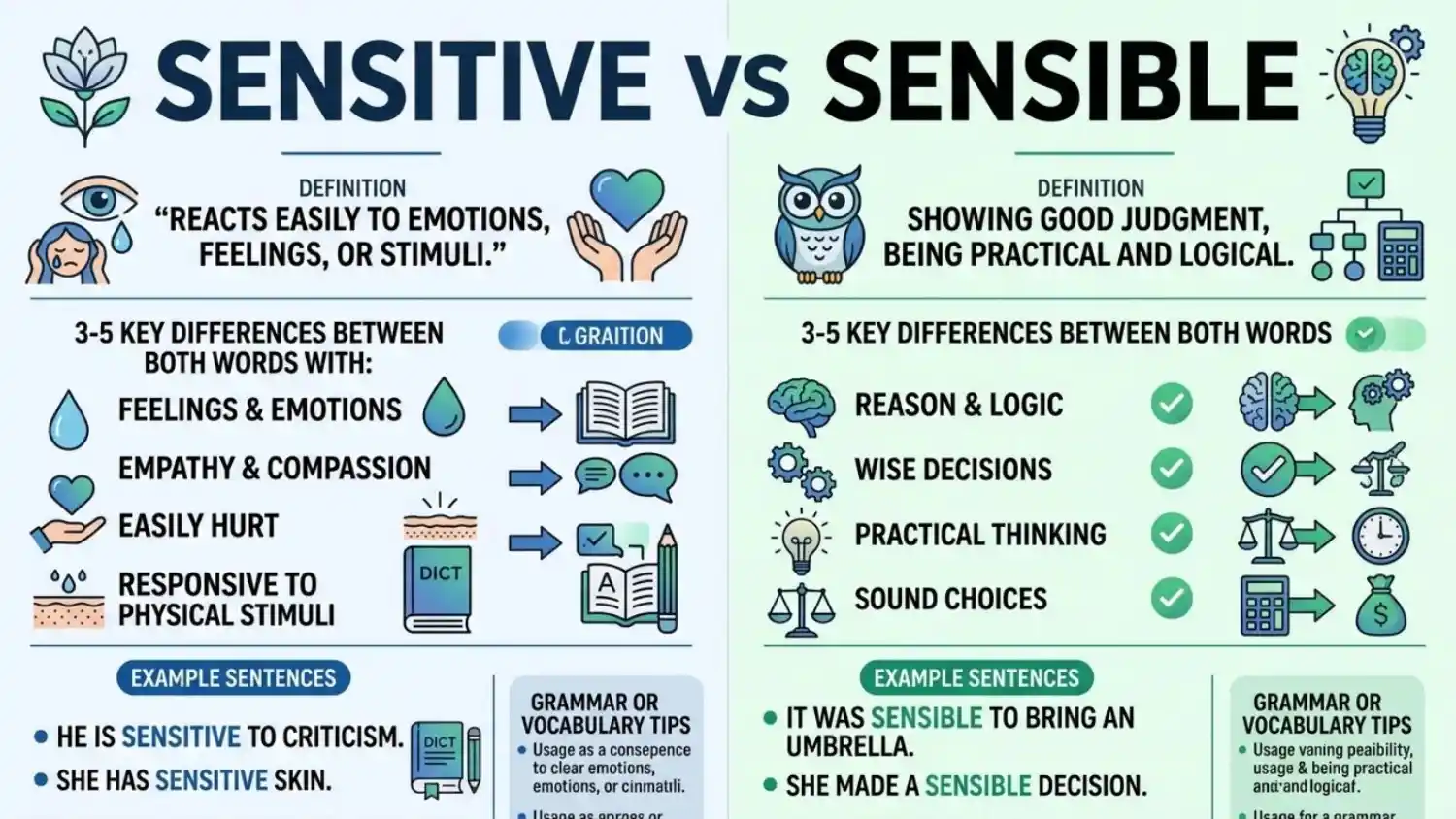
Sensitive means someone feels things deeply. This can mean strong emotions. It can also mean being easily hurt or upset.
Sensible means someone makes smart choices. It means using good sense and clear thinking.
Example: “She is sensitive, so sad news can upset her fast.”
Example: “He is sensible, so he always saves part of his pay.”
So sensitive is about feelings. Sensible is about smart choices.
Where These Words Come From
Sensitive comes from the Latin word “sensus.” This word means “feeling” or “sense.” Over time, English speakers used “sensitive” to talk about people who feel things strongly, like emotions or pain.
Sensible also comes from the same Latin root, “sensus.” But it took a different path. It grew to mean someone who uses good judgment. It became linked to smart, clear thinking, not deep emotion.
This is why both words look so close. They share the same old root. But they grew into two very different meanings over hundreds of years.
Good and Bad Points of Being Each One
Being Sensitive – The Good Points:
- You can understand other people’s feelings well.
- You often connect deeply with others.
- You may notice small changes that others miss.
Being Sensitive – The Bad Points:
- Small comments can hurt more than they should.
- Stressful days can feel harder to handle.
Sensible – The Good Points:
- You often make smart, safe choices.
- You think things through before acting.
- People often trust your advice.
Being Sensible – The Bad Points:
- You may seem too careful or too cautious at times.
- You may hold back from fun risks that others enjoy.
British English vs American English
Good news here. “Sensitive” and “sensible” are spelled the same way in both British English and American English. There is no spelling change between countries for these words.
In both places, “sensitive” is used to talk about feelings. In both places, “sensible” is used to talk about smart choices. The meaning stays the same everywhere.
| Word | British English | American English | Common Use |
| Sensitive | Sensitive | Sensitive | Feelings, emotions |
| Sensible | Sensible | Sensible | Smart choices, good judgment |
Which Word Should You Use?
Since spelling never changes, this is about picking the right meaning.
Use sensitive when: You want to talk about feelings, emotions, or being easily affected by something.
Use sensible when: You want to talk about smart choices, clear thinking, or good judgment.
If you are describing a caring friend: Use sensitive, since it points to deep feelings and care for others.
If you are describing a wise decision: Use sensible, since it points to smart, clear thinking.
A Real Life Example
Jake was writing a job reference for his coworker. He wanted to say his coworker was calm and made smart choices under pressure. He wrote, “She is very sensitive under pressure.”
His manager read it and paused. That sentence made it sound like his coworker got upset easily under pressure. This was the opposite of what Jake meant.
Jake fixed the sentence. He wrote, “She is very sensible under pressure.” Now the meaning was clear. His coworker made smart, calm choices, not emotional ones. This small word change made a big difference in his reference letter.
Common Mistakes with Sensitive and Sensible
Here are common mistakes. Here is how to fix them.
Mistake 1: “He gave a very sensitive answer during the interview.”
Fix: If you mean he gave a smart, well-thought-out answer, use “sensible” instead.
Mistake 2: “She has sensible skin, so she avoids strong soap.”
Fix: If you mean her skin reacts easily, use “sensitive” instead.
Mistake 3: Thinking both words always mean something good.
Fix: Both words can be good, but they describe very different traits. One is about feeling. One is about thinking.
Mistake 4: Mixing up the words in writing without noticing.
Fix: Always ask yourself: Am I talking about feelings, or am I talking about smart choices? This will guide you to the right word.
Sensitive and Sensible in Everyday Life
Let’s look at how these words show up in real life.
In emails: “Please be sensitive when sharing this news with the team.” “We made a sensible choice by saving part of the budget.”
In news stories: “The topic is sensitive, so the reporter chose her words with care.” “Experts say the new rule is a sensible way to protect workers.”
On social media: “I’m a sensitive person, and that’s okay. Feelings matter. ” “Made the sensible choice and packed a lunch instead of eating out.”
In school essays: “The main character is sensitive, feeling every loss deeply.” “The character makes a sensible plan to solve the problem.”
These examples show how clearly each word fits its own meaning.
What People Search Online
People search “sensitive vs sensible” a lot while learning English. Many people, especially new English learners, find these words tricky because they look so similar.
People also search this while writing essays, job letters, or reviews, since picking the wrong word can send the wrong message.
This topic is searched steadily all year, in every English-speaking country, since this word mix-up is common no matter where you live.
Sensitive vs Sensible Comparison Table
| Feature | Sensitive | Sensible |
| Main Meaning | Feels things deeply | Makes smart choices |
| Focus | Emotions, feelings | Judgment, clear thinking |
| Example | “She is sensitive to criticism.” | “He made a sensible plan.” |
| Word Root | Latin “sensus” (feeling) | Latin “sensus” (feeling) |
Frequently Asked Questions
1. Can a person be both sensitive and sensible? Yes. A person can feel things deeply and still make smart, clear choices. The two traits are not opposites.
2. Is being sensitive a bad thing? No. Being sensitive means you notice feelings and care deeply. It can be a strength, not a flaw.
3. Is being sensible always about being cautious? Not always, but it often means thinking things through before acting, which can lead to more careful choices.
4. Why do these words look so similar? Both come from the same old Latin word, “sensus,” which means “feeling.” Over time, they grew into two different meanings.
5. Is there a British spelling difference for sensitive or sensible? No. Both words are spelled the same in British English, American English, and all other English-speaking places.
6. Which word fits skin care products, sensitive or sensible? “Sensitive” fits skin care, as in “sensitive skin,” since it means skin that reacts easily to certain products.
7. Which word should I use to describe someone who plans ahead well? Use “sensible.” This word points to smart planning and good judgment.
Wrapping It All Up;
Sensitive and sensible may look alike, but they mean very different things. Sensitive is about feeling things deeply, like emotions or reactions. Sensible is about making smart, clear choices. Both words come from the same old Latin root about feeling, but they grew apart over time into two separate meanings.
The easy rule to remember is simple. Sensitive is about feelings. Sensible is about smart thinking.
Now that you know the difference, you can write and speak with more confidence. Whether you’re writing a school essay or chatting with a friend, you’ll always pick the right word. Keep this guide close, and you’ll never mix up sensitive and sensible again.