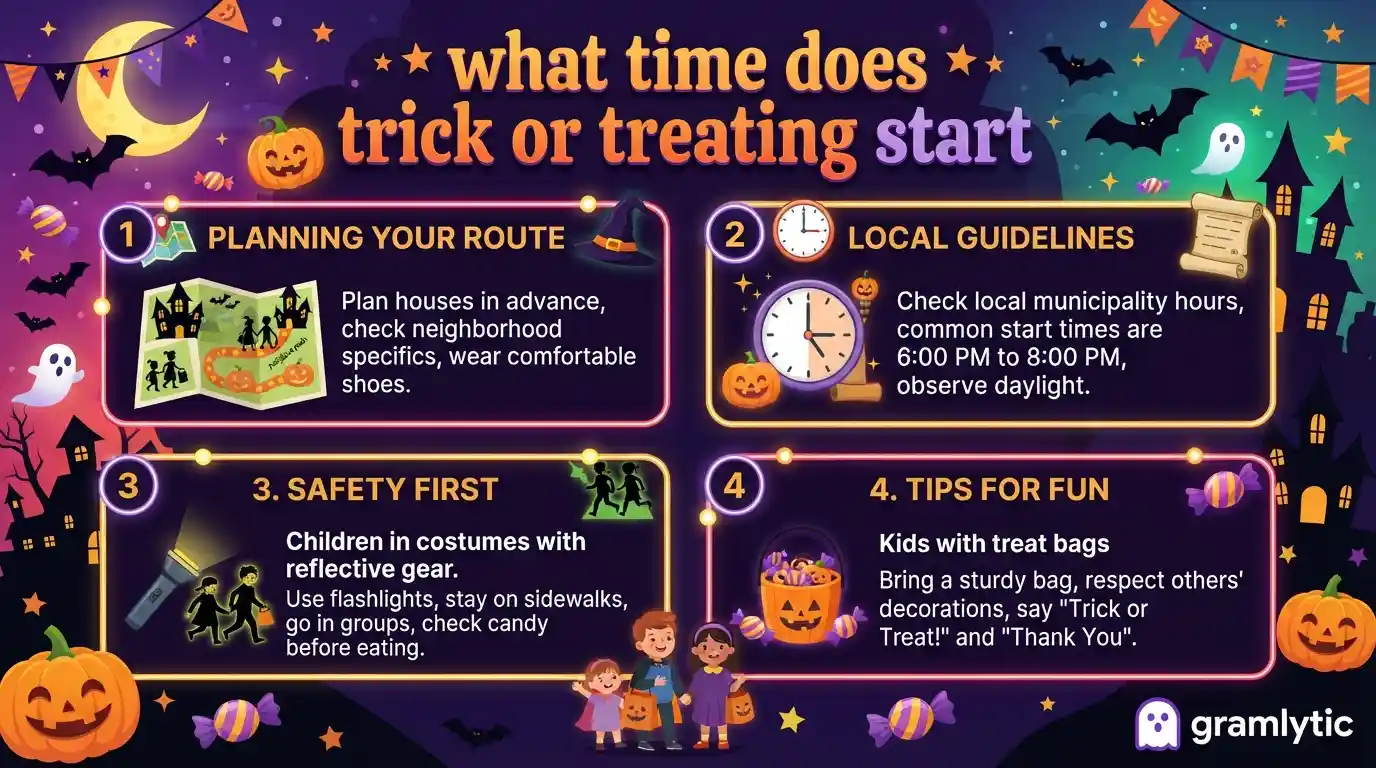
Trick-or-treating is one of the most fun parts of Halloween. Children dress up as witches, superheroes, ghosts, and other characters. They carry pumpkin-shaped buckets and visit nearby homes to collect candy. But before heading outside, parents and children often have one important question: what time does trick-or-treating start?
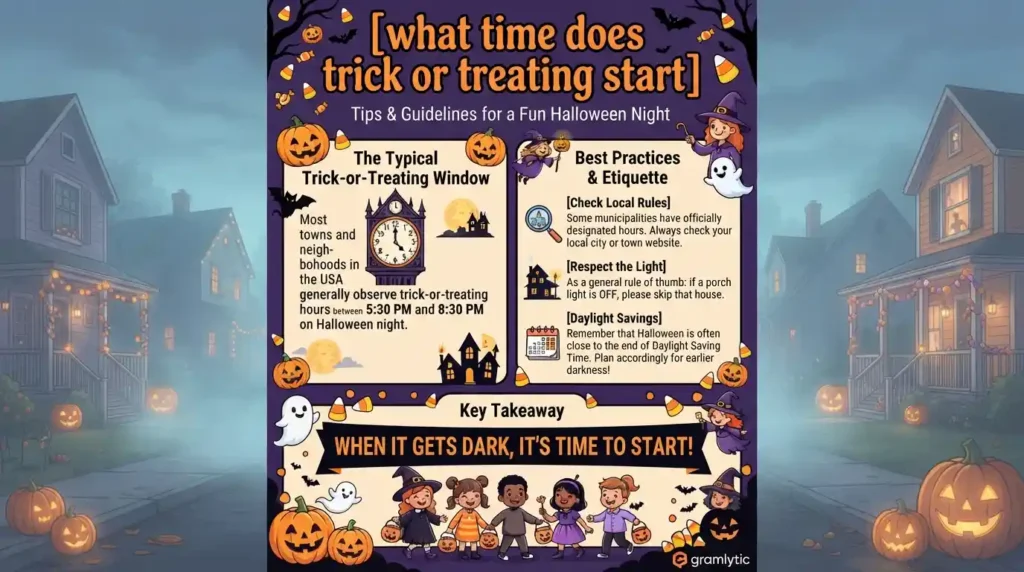
Trick-or-treating usually starts between 5:00 PM and 6:00 PM on Halloween in many US communities. However, there is no single start time for the entire country. Some towns set official hours, while others follow local customs. Many families finish between 7:00 PM and 8:00 PM, but some areas allow trick-or-treating later.
In 2026, Halloween falls on Saturday, October 31. This gives many families more flexibility to plan their evening. Even so, you should check your local town’s schedule before leaving home.
This guide explains the usual starting time, when trick-or-treating ends, the best time for different age groups, and how to prepare for a safe Halloween night.
What Time Does Trick-or-Treating Start in 2026?
For Halloween 2026, a good general estimate is 5:00 PM to 6:00 PM. The exact time depends on where you live and whether your town has announced official hours.
Some communities start at 5:00 PM to give younger children more time to collect candy before it gets too dark. Others begin at 5:30 PM or 6:00 PM. In places without official hours, families often follow the usual timing in their neighborhood.
For example, the City of Pittsburgh has announced trick-or-treating from 5:30 PM to 7:30 PM on October 31, 2026. Grand Rapids, Michigan, recommends hours from 6:00 PM to 8:00 PM. These examples show that schedules can differ from one city to another.
The best way to find your local start time is to visit your city or town’s official website. You can also check announcements from your local police department or parks and recreation office.
Do not assume that every town in your state follows the same schedule. Two nearby communities may have different hours.
What Time Does Trick-or-Treating End?
Trick-or-treating often ends between 7:00 PM and 9:00 PM, although the exact time varies by location. If your town publishes official hours, plan to finish within that period.
Many communities choose an end time of 7:00 PM or 8:00 PM. This gives children enough time to visit homes without keeping families out too late. Other neighborhoods may continue later if local customs allow it.
Pay attention to the homes you visit. A lit porch often means residents are welcoming trick-or-treaters. If the porch light is off and nobody is answering, move on to another home.
Parents should also choose a return time before children leave. Older children may want to visit more houses, but they should know when to head home.
Because Halloween falls on a Saturday in 2026, some families may be able to stay out longer than they would on a school night. Still, local schedules and child safety should guide the plan.
What Is the Best Time to Go Trick-or-Treating?
The best time depends on your child’s age, bedtime, and local trick-or-treating hours. You do not need to spend the whole evening outside to enjoy Halloween.
For Toddlers and Preschool Children
Young children usually do best when they start early. If your community allows trick-or-treating from 5:00 PM, that can be a good time to begin.
Younger children may become tired after walking from house to house. They may also find crowded sidewalks or dark streets uncomfortable.
Choose a short route with homes close together. Visit neighbors you know and return home when your child starts to feel tired.
You can also look for daytime Halloween events at schools, parks, libraries, or shopping centers. These events may be easier for families who do not want to stay outside after dark.
For School-Age Children
Children in elementary school often enjoy going out around 5:30 PM or 6:00 PM, if those times fit local rules.
At this age, children may want to visit more houses and show their costumes to friends. Plan a route through familiar streets and agree on where everyone will meet if the group becomes separated.
An adult should accompany younger children. Make sure everyone understands basic road safety before leaving.
For Older Children and Teenagers
Older children may prefer to start later or stay out longer. If parents allow them to go without an adult, they should travel with friends and stay together.
Set a clear return time and agree on the streets they can visit. Older children should carry a working phone and know how to contact a trusted adult.
They should not enter strangers’ homes or cars, even if someone offers candy. If a situation feels unsafe, they should leave and contact a trusted adult.
Does Trick-or-Treating Start at Sunset?
Not always. Some people begin trick-or-treating before sunset, while others prefer to wait until early evening.
The start time usually depends on local customs and official schedules rather than sunset alone. A town may set a fixed time so residents know when to expect visitors.
Starting before it gets fully dark can help young children see sidewalks, steps, and driveways. However, many families enjoy trick-or-treating after sunset because porch lights, pumpkins, and Halloween decorations create a festive atmosphere.
If you plan to go out near sunset, check the local weather and daylight conditions. Bring a flashlight or glow stick in case your route becomes dark.
Drivers may have trouble seeing children wearing dark costumes. Bright colors and reflective materials can help make children easier to notice.
How Can You Find Official Trick-or-Treating Hours Near You?
The easiest way to confirm the time is to check a reliable local source. Follow these steps before Halloween.
- Search for your town’s schedule. Use a search phrase such as “trick-or-treating hours 2026” followed by your city or town’s name.
- Check the official city website. Look for announcements from the local government or community calendar.
- Check local police announcements. Police departments sometimes share Halloween hours and road safety advice.
- Look at parks and recreation events. These departments may organize early Halloween activities for children.
- Confirm the date. Make sure the information applies to October 31, 2026, rather than a previous year.
- Check again before leaving. Weather or other local conditions can sometimes affect planned events.
Social media posts can be useful, but check the original source before relying on them. A post from a neighbor may describe one street rather than the entire town.
If your city does not set official hours, ask neighbors or check local community groups to learn what time families usually begin.
How to Prepare for Trick-or-Treating
A little preparation can make Halloween easier for both children and adults. You do not need expensive costumes or complicated plans.
Choose a Comfortable Costume
Choose a costume that fits well and allows your child to walk easily. Long dresses, loose capes, and oversized shoes can cause trips and falls.
Make sure masks do not block vision or breathing. Face paint can be a useful alternative, but use products made for the skin and test them first on a small area.
If the weather is cold, add warm clothing underneath the costume. Choose a design that allows your child to move comfortably.
Reflective tape on costumes and candy bags can help drivers see children after dark.
Prepare a Candy Bag
A lightweight bag or bucket is usually enough for a short trip. Pumpkin-shaped buckets are popular, but any bag that is easy to carry can work.
For younger children, choose a container that is not too heavy. A large bucket can become difficult to carry after it fills with candy.
You can add your child’s name or a small reflective tag to help identify the bag. Avoid decorations that drag on the ground or create a tripping risk.
Plan Your Route
Choose a route before leaving home. Start with familiar streets and homes where you know residents are welcoming visitors.
For young children, a short loop near home is often enough. Older children can plan a longer route with their parents.
Use sidewalks whenever possible. Cross roads at crosswalks or intersections, and look both ways before crossing. Do not assume a driver has seen you.
If there are no sidewalks, stay as far from traffic as possible and follow local pedestrian safety guidance.
Check the Weather
Halloween weather can vary widely across the United States. Some areas may be cold, rainy, or windy, while others may remain mild.
Check the forecast before choosing clothing. Bring a light jacket if temperatures may fall during the evening.
If it rains, wear shoes with good grip and avoid slippery steps. A waterproof costume or jacket can help keep children comfortable.
If severe weather is expected, consider an indoor Halloween event or another safe activity.
Halloween Safety Tips for Children and Parents
Halloween should be fun, but safety matters when many children are walking near roads after dark.
The American Academy of Pediatrics recommends adult supervision for young children, visible costumes, careful street crossing, and checking treats before children eat them.
Keep these tips in mind.
- Carry a flashlight: Check that the batteries work before leaving home.
- Use reflective clothing: Add reflective tape or bright details to dark costumes.
- Stay on sidewalks: Avoid walking in the road when a safe sidewalk is available.
- Cross at safe places: Use crosswalks and follow traffic signals.
- Visit well-lit homes: A lit porch can indicate that a household is welcoming trick-or-treaters.
- Stay with your group: Children should know who is supervising them and where to meet if separated.
- Never enter a stranger’s home or car: Collect treats at the door.
- Check candy at home: An adult should inspect packages before children eat them.
- Keep pets under control: Excited animals may react unexpectedly to costumes and visitors.
Parents should also remind children to avoid looking at phones while crossing streets. Drivers may not see a child immediately, especially when costumes are dark or children step out between parked cars.
For more guidance, visit the American Academy of Pediatrics’ Halloween safety guide.
What Should You Do If Your Neighborhood Has No Set Hours?
Some communities do not announce official trick-or-treating hours. In those places, families usually follow local customs.
Starting around 5:00 PM or 6:00 PM is a reasonable general guide, but it is not a rule for every neighborhood.
Look for signs that residents are ready for visitors. Outdoor decorations, a lit porch, and a bowl of candy near the door may suggest that a home is taking part.
Be respectful of homes that are not participating. If the lights are off or a sign says no trick-or-treaters, move on.
If you are unsure, ask a neighbor or check a local community group. You can also arrange a short visit with friends who live nearby.
For families with young children, there is no need to visit every house. A few friendly stops can be enough to make Halloween special.
How Long Should You Spend Trick-or-Treating?
There is no required length for a trick-or-treating trip. Many families spend about one or two hours outside, but the right amount depends on the child’s age and energy.
Toddlers may enjoy only 20 to 45 minutes before becoming tired. Older children may want to spend longer walking through the neighborhood.
A short route can be a better choice than trying to visit every house. Children can enjoy their costumes, greet neighbors, and collect a reasonable amount of candy without becoming exhausted.
Plan breaks if your route is long. Bring water when needed, and make sure children have eaten a meal or snack before leaving.
If the streets become crowded or the weather turns bad, it is fine to head home early. The goal is to enjoy the evening, not to collect the largest amount of candy.
What Time Should You Turn Off Your Porch Light?
If you are giving out candy, consider your local trick-or-treating hours and how long you want to welcome visitors.
Many households turn off their porch lights when they have finished handing out treats. This helps signal to children that the home is no longer participating.
If you want to welcome visitors, make sure your path and steps are well lit. Remove garden hoses, toys, loose decorations, and other objects that could cause someone to trip.
Keep pets away from the entrance if they may become excited by visitors. If you use pumpkins with candles, place them away from walking paths. Battery-powered lights are another option.
You can also prepare small treat bags before the evening begins. This makes it easier to hand out candy without leaving the door open for long periods.
Frequently Asked Questions
What time does trick-or-treating start in 2026?
In many US communities, trick-or-treating starts around 5:00 PM to 6:00 PM on Saturday, October 31, 2026. Your local schedule may be different, so check your town’s official announcement.
What time does trick-or-treating end?
Many local schedules end around 7:00 PM or 8:00 PM, while some neighborhoods continue later. Follow your town’s rules and respect homes that are no longer welcoming visitors.
Is trick-or-treating always on October 31?
Halloween is October 31, but a town may schedule an organized trick-or-treating event on another day. Check the official local calendar to confirm the date.
What is the best time for toddlers to go trick-or-treating?
Early in the local time window is often best for toddlers. It gives them time to visit nearby homes before they become tired or the streets become too dark.
Can teenagers go trick-or-treating?
Local customs and rules vary. Parents should set clear expectations, choose a safe route, and agree on a return time. Check local guidance if your town has specific rules.
Should you go trick-or-treating if it rains?
Light rain may not stop the event, but check local announcements and weather alerts. Wear suitable clothing and shoes, and avoid slippery paths. Consider an indoor event if conditions become unsafe.
What should children do with their candy after trick-or-treating?
An adult should inspect treats before children eat them. Discard packages that are open, damaged, spoiled, or otherwise suspicious. Pay attention to choking risks for very young children and any known food allergies.
Do you need to wait until it gets dark?
No. Some towns allow trick-or-treating before sunset. Starting earlier can help young children see better and finish before bedtime. Follow the hours set by your community.
Final Answer: What Time Does Trick-or-Treating Start?
Trick-or-treating usually starts around 5:00 PM to 6:00 PM on Halloween in many US communities. Many local schedules finish around 7:00 PM or 8:00 PM, although hours vary.
In 2026, Halloween falls on Saturday, October 31. Check your town’s official schedule before leaving home, especially if you have young children.
Choose a comfortable costume, plan a simple route, carry a flashlight, and inspect candy before eating it. With a little preparation, your family can enjoy a fun and safe Halloween evening.

Emily Carter is an English grammar writer based in Portland, Oregon, with 7+ years of experience turning tricky grammar rules into simple, easy lessons.