You’re booking a flight. You look at seat choices, and you see two different words: “coach” on one page, “economy” on another. Are they even different? Or is this just airlines using fancy words for the same seat?
Here’s the short answer: it’s mostly the second one. But there’s a bit more to the story, and it’s worth knowing before your next flight.
The Fast Answer
Coach class and economy class almost always mean the exact same thing. Both point to the normal, cheaper seats on a plane.
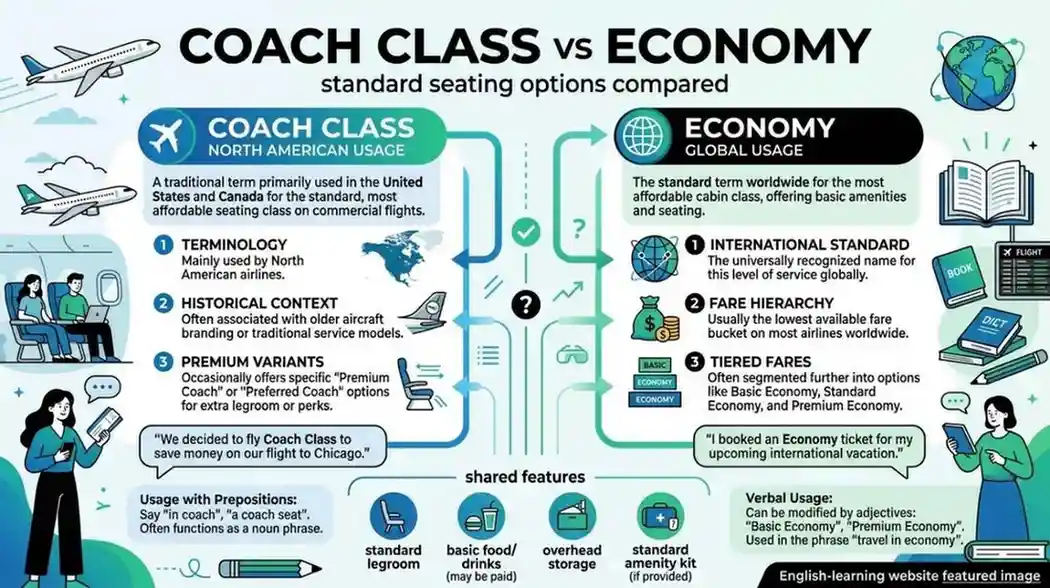
Some airlines just like one word more than the other. “Coach” is used more in the US. “Economy” is used more around the world, mostly outside North America.
- “I booked a coach seat since it was the cheapest choice.” (US airline)
- “We flew economy on our trip to Europe.” (flight outside the US)
Same seat. Same trip. Just a different word, based on which airline, or which country, you fly with.
Why Airlines Use Two Different Words
This is not really two different things. It’s more about old habits in language and how airlines choose to brand their seats. US airlines grew up using the word “coach.” This word came from old train travel, where “coach” meant the plain, basic seating area, apart from the fancier cars.
Airlines outside the US, mostly in Europe and Asia, picked “economy” instead. This word just means the lower-cost, normal choice, compared to pricier seats.
Over time, both words came to mean the same basic thing: the normal seat most people book on a flight.
Are There Ever Real Differences?
Most of the time, no. Coach and economy are just two names for the same seat. But some airlines now split economy into smaller groups, which makes things feel a bit more layered.
Some airlines offer “basic economy.” This is a stripped-down choice with fewer extras, like no seat pick or free bag. Then there’s normal economy, which usually gives a bit more room to change plans. Some airlines also offer “economy plus” or “premium economy.” This gives more legroom and a few nicer extras, for a higher price.
“Coach” almost never gets split into these smaller groups the same way. It’s usually just one simple choice.
A Bit More History Behind the Words
It helps to know a little more about where these words really came from. Long before planes were common, trains were the main way people traveled long distances. Train cars were split into different levels. The nicer, roomier cars were for people who paid more. The plain, basic cars were called “coach” cars.
When air travel became common, US airlines borrowed this same word. It made sense to people already used to train travel, so “coach” stuck as the word for the basic, no-frills seats on a plane.
“Economy,” on the other hand, grew from a much simpler idea. It just means low-cost, or budget-friendly. Airlines outside the US leaned into this word since it plainly told travelers what they were getting: a lower-cost option, without any extra branding tied to trains.
Side-by-Side Table
| Coach Class | Economy Class | |
| Common region | United States | Around the world, mostly outside the US |
| Meaning | Normal, budget seating | Normal, budget seating |
| Where it came from | Borrowed from train travel | A simple, plain word |
| Smaller groups | Rarely split further | Often split into basic, normal, and premium |
A Simple Way to Remember
Think of it like the words “soda” and “pop.” Same drink, just a different word, mostly based on where you’re from. Coach and economy work the same way. Same basic seat, just a habit in how airlines choose to label it.
Which Word Will You See More Often?
Booking with a US-based airline? You’ll likely see “coach” used a lot, though many US airlines now use both words without much thought.
Booking with an airline outside the US? “Economy” is far more common. You’ll rarely see the word “coach” used outside the US at all.
Comparing prices across different airlines? Don’t think one word means a better deal than the other. Always check what’s really included, since the name alone won’t tell you much.
Common Mistakes People Make
Thinking “coach” is a lower level than “economy.” They’re the same level. Neither word means a worse or better seat on its own.
Thinking all economy seats are the same. Basic economy, normal economy, and premium economy can all come with very different extras, even on the same airline.
Not checking what’s really included. The name on your ticket won’t tell you if a bag or seat pick is included. Always read the full details closely.
Thinking flights outside the US never use “coach.” It’s rare, but a few airlines outside the US do use “coach” at times, mostly airlines with strong ties to the US.
Everyday Examples
In a travel forum post: “Just booked coach for our flight to Chicago, it was way cheaper than I thought.”
In an airline email: “Your economy class ticket includes one carry-on bag.”
Text to a friend: “We’re flying economy this time, need to save money for the hotel.”
In a customer chat: “I’m in coach right now, is there a way to move up to premium?”
Search Trends and Usage Data
People search “coach class or economy” for a few clear reasons.
- US travelers: Many search this just to check that both words mean the same seat before booking a flight inside the US.
- Travelers going abroad: Others search this after seeing the word “economy” used everywhere outside the US, wondering if it’s different from what they call “coach” back home.
- Frequent flyers: Some search this while comparing airline fare levels, trying to understand what basic, normal, and premium economy really include.
Both words stay in steady use, split mostly by region, not by any real change in the seat itself.
Why This Small Word Choice Still Matters
Even though coach and economy mean the same thing, it still helps to understand the difference in wording, mostly if you often book flights across different countries. Seeing “economy” on an international site and “coach” on a US site can feel confusing if you don’t know they mean the same seat.
This matters even more when you’re comparing prices across airlines from different countries. If you assume the words point to two different seat types, you might pick a pricier option by mistake, thinking it offers something extra that it simply doesn’t.
Knowing this small fact can save you a bit of stress, and maybe even a bit of money, next time you’re comparing flights from airlines based in different parts of the world.
Tips for Booking the Right Seat
Since the word itself won’t tell you much, it helps to know what to actually look for when booking a flight.
First, always check the fare rules before you pay. Look for whether a bag is included, whether you can pick your seat for free, and whether you can change your flight later without a big fee.
Second, don’t be afraid to compare a few fare levels side by side, even on the same airline. Sometimes paying a little more for normal economy over basic economy is worth it, mostly if you know you might need to change plans.
Third, remember that airline websites often show prices sorted from cheapest to priciest. The cheapest option is usually some form of basic economy, so don’t assume it’s the same as a normal coach or economy seat just because it shows up first.
What About Business and First Class?
It helps to see where the coach and economy fit next to the other seat types on a plane, so the full picture makes sense.
Business class sits above coach and economy. It offers more room, comfier seats, and often better food and drink service, for a much higher price.
First class sits at the very top. It’s the most costly option, with the most room, privacy, and extra care from the crew.
Coach and economy sit below both of these, as the standard, most affordable way to fly. This is why most travelers, most of the time, end up flying in coach or economy, since it’s simply the most budget-friendly choice.
Frequently Asked Questions
1. Is coach class cheaper than economy class? No, they’re the same level. Neither word means a cheaper or pricier seat compared to the other.
2. Why do some airlines use “coach” and others use “economy”? It mostly comes down to habit and branding, going back to old train travel words used in the US.
3. Is premium economy the same as coach? No. Premium economy is a step up. It usually comes with more legroom and small extras, for a higher price than normal coach or economy seats.
4. Do airlines in Europe ever use the word “coach”? Rarely. “Economy” is the normal word across most of Europe and much of the world outside the US.
5. Does the actual seat differ between coach and economy? No. If the same airline uses both words, they almost always point to the exact same physical seat.
6. Is “basic economy” the same as normal coach? Not quite. Basic economy usually removes extras like seat pick or a free carry-on bag, making it a smaller version of normal economy or coach.
7. Should I pick based on which word sounds nicer? No. Always check what’s really included in the price, instead of guessing that one word means a better deal.
The Bottom Line:
Coach class or economy? In almost every case, they’re just two words for the exact same seat, split mostly by habit, not by any real change in comfort or price. The US tends to say “coach.” Most of the rest of the world says “economy.”
What really matters when booking isn’t the word on your ticket. It’s the details underneath it. Always check what’s included, like a bag, seat pick, or legroom, before you think one word means a better deal than the other. Knowing this one small fact can make comparing flights a whole lot easier, no matter where in the world you’re flying.
At the end of the day, both words point to the same simple goal: getting you from one place to another without paying for extras you don’t need. Whether your ticket says “coach” or “economy,” you’re sitting in the same kind of seat, on the same kind of plane, headed to the same place. The only real difference is the word printed on your boarding pass.