Blooming vs blossoming can seem like a simple word choice, but the two words have a few different uses. Both words can describe flowers opening. Both can also describe growth, success, or something becoming more active. So, how do you know which one to use?
The good news is that blooming and blossoming are often very close in meaning. When talking about flowers, both can mean that flowers are opening or coming into bloom. For example, you can say, “The roses are blooming,” or “The roses are blossoming.”
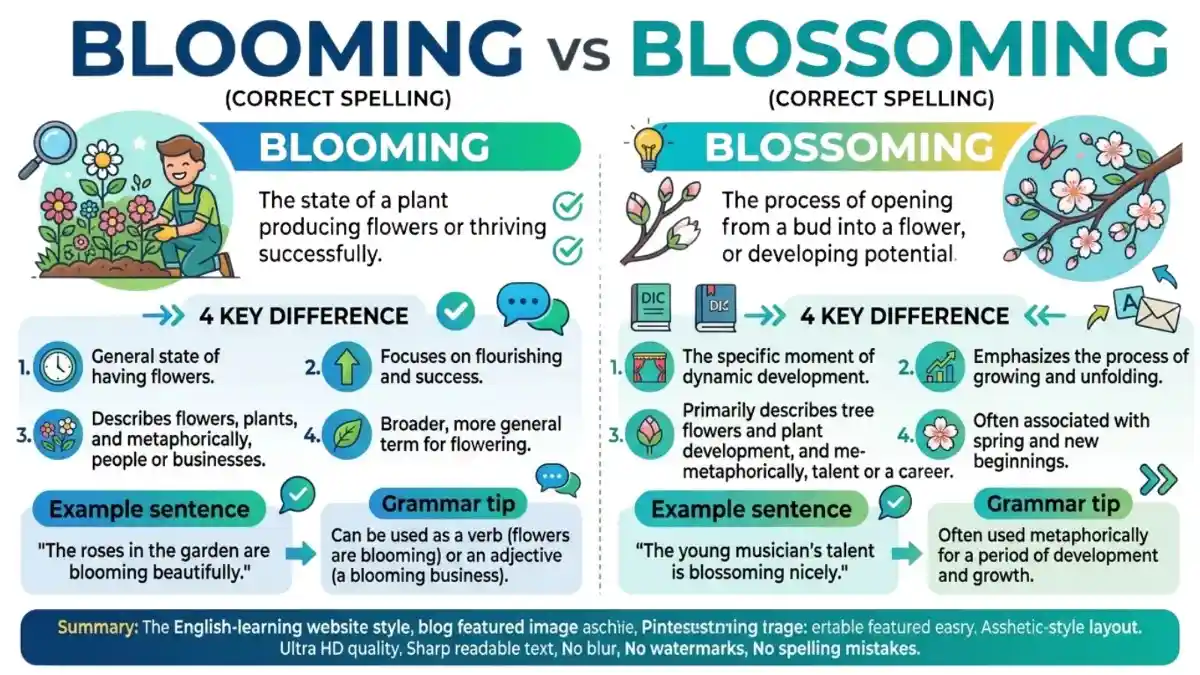
There is a small difference in tone and use. Blooming is often more direct and common. It can describe flowers, plants, people, and things that are growing or becoming successful. Blossoming often gives a stronger sense of growth and development. It is also common when describing a person, relationship, talent, or new idea.
People search for blooming vs blossoming because both words are natural, but they want to know when one sounds better than the other. This guide explains the difference with simple rules, examples, common mistakes, and useful writing tips.
Blooming vs Blossoming – Quick Answer
The short answer is:
- Blooming means producing flowers or opening into flowers.
- Blossoming can also mean producing flowers or opening into bloom.
- Blooming is often more direct and common.
- Blossoming often suggests growth, development, or becoming successful.
- Both words can be used for plants and flowers.
Use blooming for flowers and plants
The roses are blooming.
The garden is blooming in spring.
The trees are blooming with flowers.
Here, blooming means producing or opening flowers.
Use blossoming for flowers
The apple trees are blossoming.
The cherry trees are blossoming in the warm weather.
This means the flowers are opening or appearing.
Use blossoming for growth
Her talent is blossoming.
Their friendship is blossoming.
Here, blossoming is not about real flowers. It means something is developing and becoming stronger.
Use blooming for success or activity
The business is blooming.
This is possible, but flourishing or thriving may sound more natural in formal English.
The key idea is:
Blooming = opening or growing, especially flowers.
Blossoming = opening or growing, often with a sense of development.
The Origin of Blooming vs Blossoming
The two words come from different but closely related ideas.
The origin of blooming
Bloom has a long history in English. It comes from Old Norse blóm, meaning “flower” or “blossom,” and is related to words in other Germanic languages. (etymonline.com)
The word first referred to a flower or flowering.
Over time, bloom developed wider meanings.
It can now mean:
- A flower opening
- A flower itself
- A period of beauty
- A healthy appearance
- A period of success or growth
The verb bloom means to produce flowers or develop successfully.
The roses bloom in spring.
The present participle is:
bloom → blooming
The origin of blossoming
Blossom comes from Old English blōstm, meaning a flower or bloom. It is related to Old English words connected with flowering and growth. (etymonline.com)
Like bloom, blossom began with a direct connection to flowers.
The verb blossom means to produce flowers or develop.
The tree blossoms in spring.
The present participle is:
blossom → blossoming
Why do the words feel so similar?
Both words describe flowers opening.
Over time, both also gained figurative meanings.
For example:
Her confidence is blooming.
Her confidence is blossoming.
Both can suggest growth, although blossoming often sounds more natural when talking about personal development.
British English vs American English Spelling
There is no major British versus American spelling difference between blooming and blossoming.
Both British and American English use:
- blooming
- blossoming
- bloom
- blossom
The main difference is not spelling. It is context, style, and personal preference.
Comparison table
| Word | British English | American English | Main meaning |
| blooming | Blooming | Blooming | Flowering or developing |
| blossoming | Blossoming | Blossoming | Flowering or developing |
| bloom | Bloom | Bloom | Flower or develop |
| blossom | Blossom | Blossom | Flower or develop |
| bloomed | Bloomed | Bloomed | Past form of bloom |
| blossomed | Blossomed | Blossomed | Past form of blossom |
British English
British English uses both words naturally.
The roses are blooming.
The apple trees are blossoming.
British English also uses blossoming in figurative writing.
Her career is blossoming.
American English
American English also uses both forms.
The flowers are blooming.
The trees are blossoming.
You can use either word when describing flowers.
So, unlike words such as colour and color, there is no British or American spelling rule that forces you to choose one.
Which Spelling Should You Use?
Because blooming and blossoming are both correct, the best choice depends on what you want to say.
Use blooming for simple flower descriptions
If you are talking about flowers opening, blooming is a clear and common choice.
The roses are blooming.
The garden is blooming beautifully.
It sounds natural in everyday English.
Use blossoming for development
When you want to show growth over time, blossoming can be a better choice.
Her confidence is blossoming.
Their friendship is blossoming.
His talent is blossoming.
These examples suggest that something is growing and becoming stronger.
Use blossoming for a poetic tone
Blossoming can sound more warm, vivid, or poetic.
Compare:
Her career is blooming.
Her career is blossoming.
The second sentence can sound more expressive.
For academic and professional writing
Choose the word that gives the exact meaning you need.
For plants:
The plants are blooming.
For development:
The student’s skills are developing.
In very formal writing, developing, growing, or increasing may be clearer than either word.
Common Mistakes with Blooming vs Blossoming
Mistake 1: Thinking one word is wrong
Both blooming and blossoming are correct English words.
The flowers are blooming.
The flowers are blossoming.
Both sentences can be correct.
Mistake 2: Using blossoming only for flowers
Blossoming can describe more than plants.
Their friendship is blossoming.
Her career is blossoming.
His confidence is blossoming.
These uses describe growth or development.
Mistake 3: Thinking blooming can only describe flowers
Blooming also has figurative uses.
The town has a blooming art scene.
However, in many cases, words such as growing, thriving, or flourishing may sound more natural.
Mistake 4: Using both words when you need a precise scientific term
In science, it may be better to use specific words such as:
- flowering
- producing flowers
- opening
- developing
For example:
The plant is flowering.
This can be clearer than using a figurative word.
Mistake 5: Assuming blossoming always means flowers
In modern English, blossoming often has a figurative meaning.
The young artist is blossoming.
This does not mean the artist is producing flowers. It means the artist is developing.
Blooming vs Blossoming in Everyday Examples
In emails
The garden is blooming after the spring rain.
For personal or creative emails:
Her new business is blossoming quickly.
In news writing
Cherry trees are blooming earlier this year.
For a human-interest story:
The young artist’s career is blossoming.
On social media
My roses are finally blooming!
Or:
Watching this little garden blossom has been amazing.
Social media often uses both words in a warm or emotional way.
In formal writing
The plants begin blooming in early spring.
For development:
The project is blossoming into a larger community effort.
In literature
Blossoming can create a more poetic feeling.
Their love was blossoming in the quiet village.
Blooming can also be poetic:
The garden was blooming under the summer sun.
Both can create vivid images.
Blooming vs Blossoming – Google Trends & Usage Data
People search blooming vs blossoming because both words can describe flowers and growth. The question often comes down to which word sounds more natural in a particular sentence.
Search interest can change by country, season, and context. Searches for both terms may rise during spring because people talk more about flowers, gardens, trees, and gardening.
The two words also appear in different types of writing.
Blooming is common in:
- Gardening
- Flower descriptions
- Nature writing
- Everyday speech
- Fashion and beauty
- Informal writing
Blossoming is common in:
- Gardening
- Nature writing
- Personal development
- Relationships
- Careers
- Literature
- Creative writing
Usage by country
There is no major British versus American difference in the spelling.
Both countries use:
blooming
and
blossoming
The choice is mainly based on meaning and style.
Search context matters
A search for blooming flowers usually relates to plants.
A search for blossoming relationship usually has a figurative meaning.
This shows an important difference in how the words are often used.
Blooming tends to sound more direct.
Blossoming often suggests a process of growth.
Blooming vs Blossoming: Comparison Table
| Feature | Blooming | Blossoming |
| Base word | Bloom | Blossom |
| Part of speech | Present participle/adjective | Present participle/adjective |
| Flower meaning | Flowering | Flowering |
| Growth meaning | Growing or developing | Growing or developing |
| Figurative use | Common | Very common |
| Tone | Direct, common | Warm, vivid, sometimes poetic |
| Gardening | Very common | Common |
| Relationships | Possible | Very common |
| Careers | Possible | Very common |
| Talent | Possible | Very common |
| British spelling | Blooming | Blossoming |
| American spelling | Blooming | Blossoming |
Blooming vs Blossoming for Different Situations
Flowers
Both work:
The roses are blooming.
The roses are blossoming.
Blooming may sound more direct.
Trees
Both work:
The apple trees are blooming.
The apple trees are blossoming.
Blossoming is especially common with fruit trees and spring flowers.
Relationships
Blossoming is usually more natural.
Their friendship is blossoming.
Their relationship is blossoming.
Blooming is possible but may sound less natural in some contexts.
Careers
Blossoming often works well.
Her career is blossoming.
You can also say:
Her career is growing.
Her career is flourishing.
Talent
Blossoming is a natural choice.
His talent is blossoming.
This suggests that the talent is developing over time.
Business
You can say:
The business is blooming.
But thriving, growing, or flourishing may sound more natural in professional writing.
The business is thriving.
Easy Trick to Remember Blooming vs Blossoming
Use this simple rule:
Blooming = flowers opening.
Blossoming = flowers opening or something developing.
For a plant:
The roses are blooming.
For a person:
Her confidence is blossoming.
Think of blossoming as a picture of something slowly opening and becoming better.
You can also remember:
Blooming sounds simple and direct.
Blossoming sounds more like growth and development.
This is not a strict grammar rule, but it is a useful style guide.
FAQs;
1. What is the difference between blooming and blossoming?
Both can mean that flowers are opening. Blooming is often more direct and common. Blossoming often suggests growth or development and is common in figurative language.
2. Can blooming and blossoming be used for flowers?
Yes. Both can describe flowers opening.
The roses are blooming.
The roses are blossoming.
3. Which is better, blooming or blossoming?
Neither is always better. Use blooming for a simple, direct description of flowers. Use blossoming when you want to suggest growth, development, or a more expressive tone.
4. Can you say “a blossoming relationship”?
Yes. This is a common figurative use.
They have a blossoming relationship.
It means their relationship is growing and becoming stronger.
5. Can you say “a blooming relationship”?
It is possible, but blossoming relationship usually sounds more natural and expressive.
6. Is blooming British or American English?
Blooming is used in both British and American English. There is no major spelling difference.
7. Is blossoming more formal than blooming?
Not necessarily. Blossoming can sound more poetic or expressive, while blooming often sounds more direct. The best choice depends on the sentence.
Conclusion;
The difference between blooming vs blossoming is small because both words can describe flowers opening. You can say that roses are blooming, or you can say that roses are blossoming. Both are correct.
The main difference appears when the words are used in a figurative way. Blooming often sounds more direct and simple. It works well when talking about flowers, plants, and natural growth. Blossoming often gives a stronger sense of development. It works especially well for relationships, careers, talent, confidence, and other things that grow over time.
There is no important British versus American spelling difference. Both blooming and blossoming are standard in both forms of English.
For everyday writing, use blooming when you want a clear and simple word for flowers. Choose blossoming when you want to show growth or add a warmer, more expressive tone. If you are writing in a formal or scientific setting, choose a more exact word such as flowering or developing when needed.
The easiest rule is: blooming is direct flowering, while blossoming often suggests flowering plus growth.

Emily Carter is an English grammar writer based in Portland, Oregon, with 7+ years of experience turning tricky grammar rules into simple, easy lessons.