Have you ever heard someone say, “She is my ride or die” and wondered what it means? You may see ride or die in texts, social media posts, songs, movies, and everyday talks. At first, the phrase can sound strange. Does it really mean riding somewhere or dying?
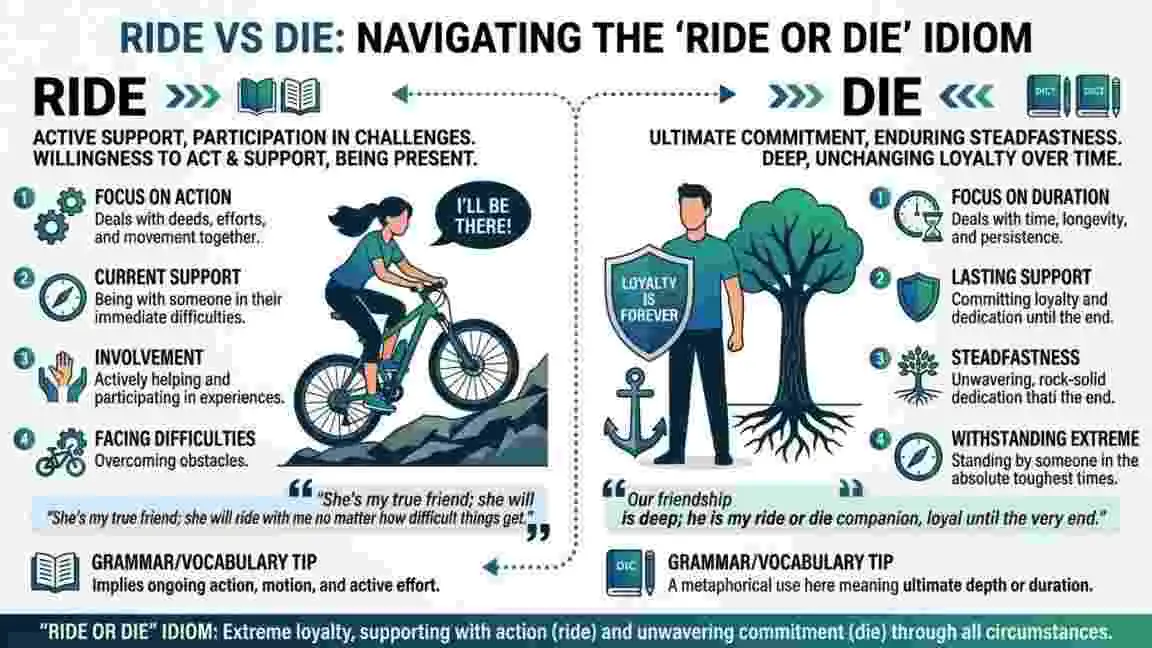
No. Ride or die usually describes a person who stays loyal to you through good times and bad times. It can describe a close friend, partner, family member, or anyone you trust deeply.
People often search for ride or die meaning because the phrase does not make sense when you read it word by word. They want to know what it means, where it came from, and how to use it correctly.
This guide explains the ride or die meaning in simple English. You will learn its meaning, origin, common uses, correct spelling, examples, and common mistakes. By the end, you will know exactly what ride or die means and when you can use it.
Ride or Die Meaning: Quick Answer
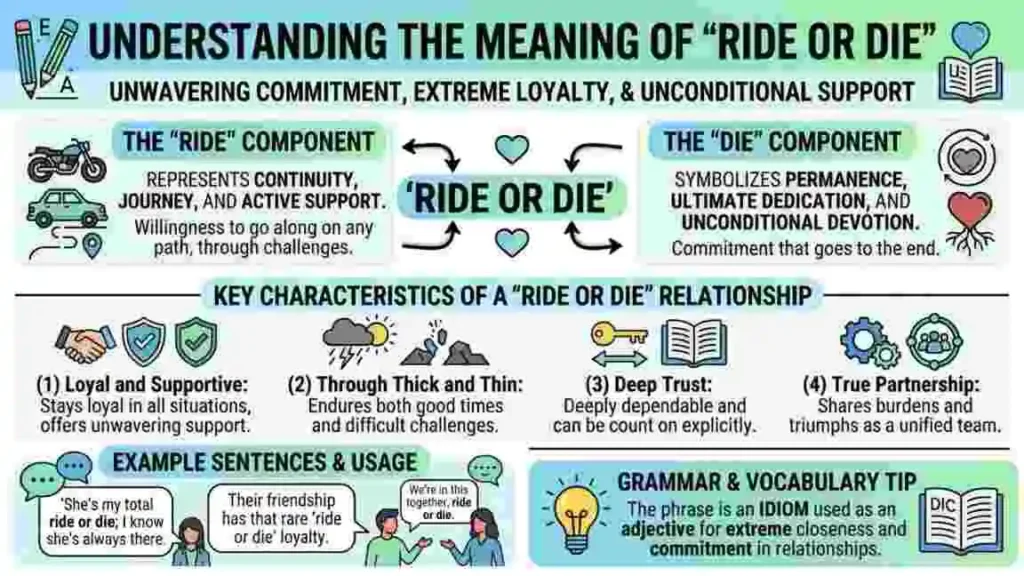
Ride or die means a person who stays loyal to you no matter what happens.
It often means someone who will support you during both good and bad times.
For example:
- “My sister is my ride or die.”
- “Jake has been my ride or die since school.”
- “She is a true ride-or-die friend.”
- “I know I can count on my ride or die.”
The phrase can show strong loyalty, trust, friendship, and support.
Simple Meaning
You can think of it this way:
Ride or die = Someone who will stay with you through hard times.
The phrase does not usually mean that a person will literally die for you. In casual speech, it shows strong loyalty.
For example:
“My best friend is my ride or die.”
This means:
“My best friend always supports me and stays by my side.”
The Origin of Ride or Die
The phrase ride or die comes from American slang.
The word ride can connect to riding with someone or staying with them. The word die adds the idea of extreme loyalty. Together, the phrase suggests that someone will stay with you even when things become very difficult.
The phrase became popular through American street and hip-hop culture. It later spread into movies, music, television, and social media.
Today, people use ride or die much more widely. You do not need to be part of any special group to use it.
People now use it for:
- Best friends
- Romantic partners
- Family members
- Close teammates
- Long-term friends
- Loyal supporters
The phrase can also appear as ride-or-die when it works as an adjective.
For example:
- “She is my ride or die.”
- “She is my ride-or-die friend.”
Both forms can appear in modern English. The choice depends on how the phrase works in the sentence.
British English vs American English Spelling
Ride or die is mainly an American slang phrase, but people also use it in British English and other forms of English.
There is no major US-versus-UK spelling change like color/colour or traveling/travelling.
The main difference involves spacing and hyphens.
Common Forms
| Form | Example | Use |
| ride or die | She is my ride or die. | Common noun phrase |
| ride-or-die | She is my ride-or-die friend. | Before a noun |
| ride or die friend | She is my ride or die friend. | Casual writing |
| ride-or-die friend | She is my ride-or-die friend. | Clear compound adjective |
The meaning stays the same.
Why Does the Hyphen Appear?
English often uses hyphens when two or more words work together to describe a noun.
For example:
ride-or-die friend
Here, “ride-or-die” describes the word “friend.”
But when you use the phrase as a noun, people often write:
She is my ride or die.
So, the form can change based on its place in the sentence.
Which Spelling Should You Use?
There is no separate American spelling and British spelling for ride or die.
Instead, choose the form based on your sentence.
For Casual Speech
Use:
ride or die
Example:
“He is my ride or die.”
This sounds natural in casual conversation and social media.
Before a Noun
Use:
ride-or-die
Example:
“She is my ride-or-die friend.”
The hyphens make it clear that the phrase describes “friend.”
For Professional Writing
Be careful with the phrase in formal writing.
Ride or die is informal slang. It works well in:
- Social media
- Text messages
- Blogs
- Casual articles
- Interviews
- Personal writing
For formal work, you may want to use a clearer phrase such as:
- loyal friend
- trusted friend
- loyal supporter
- close companion
- faithful partner
For example:
Casual:
“Sarah is my ride or die.”
More formal:
“Sarah is one of my most loyal friends.”
Common Mistakes with Ride or Die Meaning
People often misunderstand or write this phrase in different ways.
Mistake 1: Taking It Literally
Some people think ride or die means someone must literally die.
That is not usually the meaning.
Correct idea:
It means strong loyalty and support.
Mistake 2: Thinking It Only Means a Romantic Partner
A ride or die does not have to be a boyfriend, girlfriend, husband, or wife.
You can call a close friend your ride or die.
You can also use it for a family member.
Example:
“My brother is my ride or die.”
Mistake 3: Using “Ride and Die”
The common phrase is:
ride or die
Not:
ride and die
The word or is part of the original phrase.
Mistake 4: Thinking It Means “Best Friend” Every Time
A ride or die can be a best friend, but the phrase means more than just “best friend.”
It focuses on loyalty and staying with someone through hard times.
Mistake 5: Using It in Very Formal Writing
The phrase is casual slang.
In a business report or formal letter, words such as loyal, trusted, or reliable may work better.
Ride or Die Meaning in Everyday Examples
The phrase appears in many types of everyday communication.
1. Text Messages
“Thanks for helping me today. You are my ride or die!”
This shows that the speaker values the other person’s support.
2. Social Media
“Ten years of friendship. Still my ride or die!”
This can describe a long and loyal friendship.
3. Friendship
“Maria has always supported me. She is my ride or die.”
This means Maria stays loyal during difficult times.
4. Romantic Relationships
“He is not just my boyfriend. He is my ride or die.”
This means the person feels strong trust and loyalty toward their partner.
5. Family
“My mom is my ride or die.”
This means the speaker sees their mother as someone who always supports them.
6. News or Entertainment
You may see the phrase in entertainment articles when writers describe a celebrity’s close friend or partner.
For example:
“The singer called her longtime friend her ride or die.”
Here, the phrase shows a strong bond.
7. Formal Writing
The phrase is less common in formal writing.
Instead of:
“He is my ride or die.”
A formal version could say:
“He is a loyal and trusted friend.”
Ride or Die: Google Trends & Usage Data
Search interest for ride or die meaning comes from people who see the phrase online and want to understand it.
The phrase has become widely known through:
- Social media
- TikTok
- YouTube
- Movies
- TV shows
- Music
- Online conversations
The exact level of search interest can change over time and by country. Because Google Trends data changes, it is better not to use one fixed number as a permanent measure of popularity.
The phrase has strong links to American English and American popular culture, but people in many English-speaking countries now understand and use it.
The search intent behind ride or die meaning is usually simple:
- The user sees the phrase.
- The user does not understand it.
- The user searches for its meaning.
- The user wants examples.
- The user wants to know if the phrase is positive or negative.
- The user wants to know how to use it.
This makes a clear definition and simple examples very important.
Ride or Die Variations Compared
Here are the most common forms and related phrases:
| Phrase | Meaning | Example |
| ride or die | A very loyal person | “She is my ride or die.” |
| ride-or-die | Extremely loyal | “He is a ride-or-die friend.” |
| ride or die friend | A loyal close friend | “She is my ride or die friend.” |
| loyal friend | A friend who stays supportive | “He is a loyal friend.” |
| best friend | A very close friend | “She is my best friend.” |
| trusted friend | Someone you trust | “He is a trusted friend.” |
Ride or die sounds more casual and emotional than loyal friend or trusted friend.
Is Ride or Die Positive or Negative?
The phrase is usually positive.
People use it to praise someone for being loyal and supportive.
For example:
“You are my ride or die.”
This usually means:
“I trust you and know you will stay by my side.”
However, the phrase can sometimes suggest very strong loyalty, even when a person may not agree with every choice.
The meaning depends on context.
Can You Say Ride or Die About Yourself?
Yes.
You can describe yourself as someone’s ride or die.
For example:
“I’m her ride or die.”
This means:
“I will always support her.”
You can also say:
“We are ride or dies.”
This means two or more people have a very strong and loyal bond.
FAQs;
1. What does ride or die mean?
Ride or die means a person who stays loyal and supportive through good and bad times.
2. Is ride or die a good thing?
Yes. People usually use ride or die as a positive phrase to show trust, friendship, and loyalty.
3. Does ride or die mean someone will literally die?
Usually, no. It is an informal way to show very strong loyalty. It is not normally meant literally.
4. Can a friend be your ride or die?
Yes. A close friend can be your ride or die. The phrase often describes a very loyal best friend.
5. Can you use ride or die for a boyfriend or girlfriend?
Yes. You can use it for a romantic partner who gives you strong support and stays with you through hard times.
6. Is ride or die one word?
No. The common noun form is ride or die, written as three words.
When it describes a noun, you may see ride-or-die with hyphens.
7. Is ride or die formal English?
No. Ride or die is informal slang. It works well in casual speech, texts, social media, and informal writing.
Conclusion: Ride or Die Meaning
The ride or die meaning is simple: it describes someone who stays loyal to you through good times and bad times.
People often use the phrase for a close friend, partner, family member, or trusted person. It usually shows strong friendship, trust, and support.
The phrase does not normally mean that someone will literally die for you. Instead, it shows that the person is willing to stay by your side when life gets hard.
The most common form is ride or die. When the phrase describes a noun, you may also see ride-or-die, as in “ride-or-die friend.”
The phrase is informal, so it fits best in casual conversations, texts, social media, and personal writing. In formal writing, words such as loyal, trusted, or reliable may sound better.
If someone calls you their ride or die, they are usually giving you a strong compliment. They are saying that they trust you, value you, and believe you will stay by their side.