You write a sentence. You stop at one small word. Is it “it” or “it’s”? This tiny word causes more mix-ups than almost any other word in English.
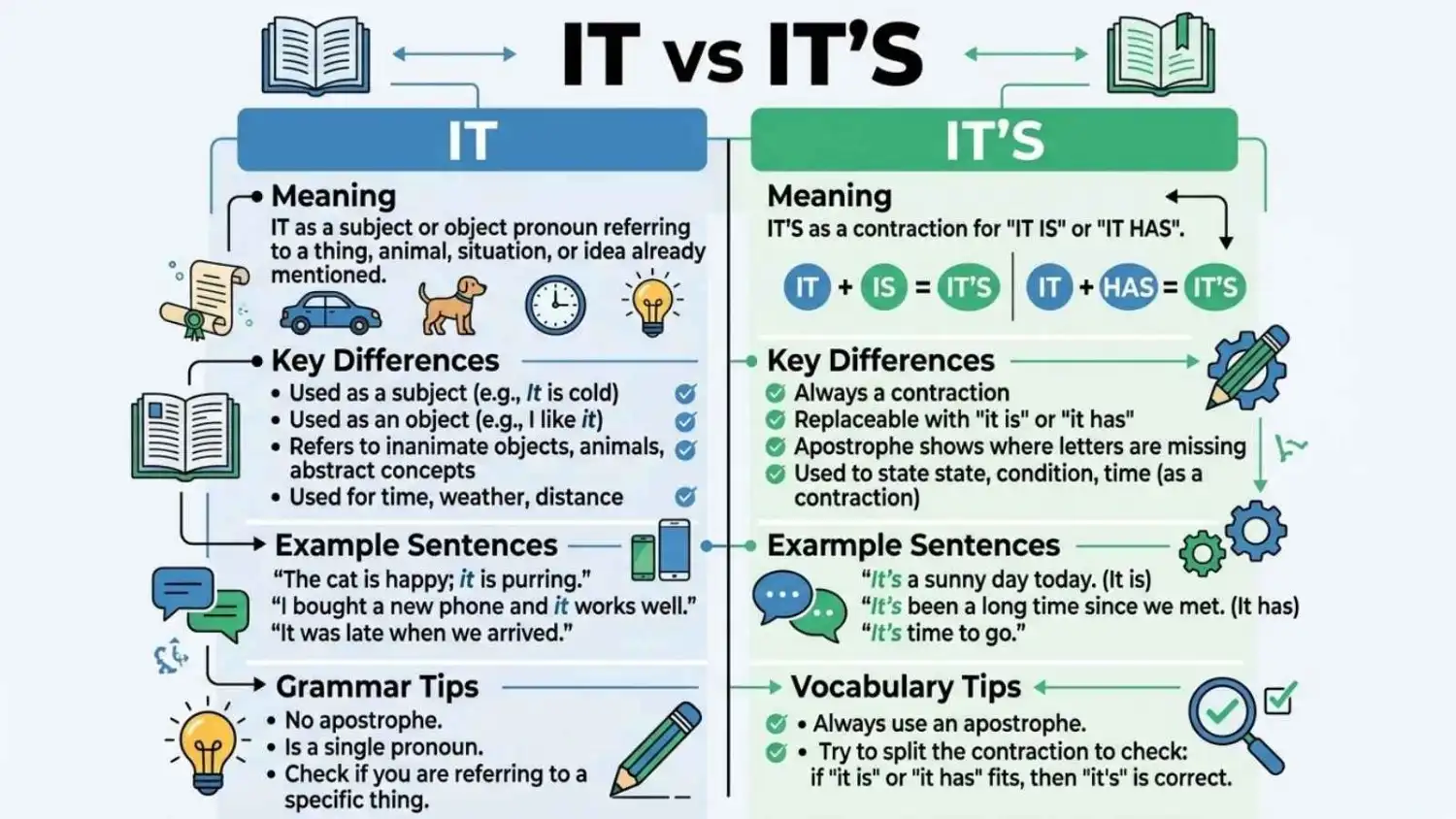
The mix-up happens because of one small mark: the apostrophe. That little mark changes the whole word. “It” is a normal word. It points to a thing. “It’s” is short for “it is” or “it has.” They sound the same when you say them out loud. But they mean very different things on paper.
People look up this word when they write texts, school work, emails, and posts. Some want to know if they need the apostrophe. Some just want to stop making a small mistake. Many people also feel unsure because “it’s” looks like it should show ownership, but it does not.
This article gives you the fast answer first. Then it shows where the word comes from. It shows common mistakes. It shows easy examples too. After this, you will never feel stuck on this word again.
It or It’s – Quick Answer
Here is the short answer:
- It = a normal word that points to a thing. Example: The bag is heavy. Put it down.
- It’s = short for “it is” or “it has.” Example: It’s raining outside. (It is raining.) It’s been a long day. (It has been a long day.)
A simple trick: if you can swap the word for “it is” or “it has” and the sentence still makes sense, use “it’s.” If not, use “it” or “its” with no apostrophe.
The Origin of It or It’s
“It” is one of the oldest words in English. It comes from Old English and has been used for a very long time to point to a thing, an animal, or an idea.
“It’s” is newer. It is a short form, called a contraction. English speakers started joining two words together to speak faster. “It is” became “it’s.” “It has” also became “it’s.” The apostrophe shows that letters are missing.
This causes confusion because of another word: “its.” “Its” shows that something belongs to “it,” just like “his” shows something belongs to “him.” Most owner words like “his,” “her,” and “its” do not use an apostrophe. But “it’s” looks like it should show ownership too, since other words use an apostrophe plus “s” to show ownership. This is why so many people get mixed up.
British English vs American English Spelling
Good news. British and American English use the same rule here. There is no spelling difference like with “color” and “colour.”
| Form | British English | American English | Meaning |
| It | It | It | Points to a thing |
| It’s | It’s | It’s | Short for “it is” or “it has” |
| Its | Its | Its | Shows something belongs to “it” |
This word causes the same mix-up in every English-speaking country. The rule does not change by region. The confusion comes from grammar, not from local spelling.
Which Spelling Should You Use?
Pick the right word based on meaning, not on where you live:
- Writing for US readers: Use “it’s” only when you mean “it is” or “it has.” Use “its” with no apostrophe to show ownership.
- Writing for UK or Commonwealth readers: Same rule applies. No change here.
- Writing for global readers: Stick with the simple test. Try swapping the word for “it is” or “it has.” If it works, use “it’s.”
- Formal writing, like reports or emails: Always double-check this word. It is one of the most common small mistakes in professional writing.
- Casual texts or social media: Even in casual writing, this mistake stands out. It is easy to fix once you know the trick.
The real question is simple: do you mean “it is” or “it has”? If yes, use “it’s.” you mean ownership, use “its.” If you just mean the plain word “it,” use no apostrophe at all.
Common Mistakes with It or It’s
Here are mistakes people often make:
- Using “it’s” to show ownership. Wrong: The cat licked it’s paw. Right: The cat licked its paw.
- Forgetting the apostrophe when you mean “it is.” Wrong: Its raining again. Right: It’s raining again.
- Mixing up “its” and “it’s” in the same sentence. Wrong: Its a nice day, but it’s color looks dull. Right: It’s a nice day, but its color looks dull.
- Trusting autocorrect too much. Some phones fix this wrong, since both words are spelled correctly on their own. Always check the meaning yourself.
- Using “it’s” out of habit, even when it does not fit. A simple fix: read the sentence with “it is” or “it has” in place of the word. If it sounds odd, you do not need the apostrophe.
It or It’s in Everyday Examples
In a text message: “It’s almost time to leave, grab your bag!”
social media post: “This puppy and its big ears are too cute! “
a news article: “The company says it’s planning to open three new stores this year.”
formal email: “Please review the report and confirm if its content is correct.”
school essay: “The plant grows fast because it’s getting plenty of sunlight.”
Each example follows the same rule. “It’s” replaces “it is” or “it has.” “Its” shows ownership, with no apostrophe at all.
It or It’s – Google Trends & Usage Data
Search data shows that this word pair is one of the most searched grammar topics in English. People search it all year, not just during one season, since the mistake shows up in daily writing, school work, and business emails.
This mix-up is common across the US, UK, Canada, Australia, and other English-speaking countries. It is also one of the top searches among English learners, since the rule feels tricky at first. Many native speakers search this too, since habit and autocorrect can make the mistake easy to miss.
Most people search for this word while writing something quickly. They want a fast, clear answer, not a long grammar lesson. This is why a short, simple trick, like the “it is” swap test, helps so many readers right away.
Comparison Table: Keyword Variations
| Word | Correct? | Use Case |
| It | ✅ Yes | Points to a thing |
| It’s | ✅ Yes | Short for “it is” or “it has” |
| Its | ✅ Yes | Shows something belongs to “it” |
| Its’ | ❌ No | Not a real word, common mistake |
FAQs
1. Is it “it’s” or “its” for showing ownership? Use “its,” with no apostrophe, to show something belongs to “it.”
2. What does “it’s” stand for? “It’s” is short for “it is” or “it has.”
3. How can I remember the difference? Try the swap test. Say “it is” or “it has” in place of the word. If it still makes sense, use “it’s.”
4. Is “its'” ever correct? No. “Its'” is not a real word. It is a common mistake.
5. Do British and American English use different rules here? No. Both use the exact same rule for “it,” “it’s,” and “its.”
6. Why do so many people get this word wrong? Because most owner words, like “his” and “its,” do not use an apostrophe. But “it’s” looks like it should show ownership, since other words add an apostrophe plus “s” for that. This makes the rule feel backward at first.
7. Does autocorrect fix this mistake for me? Not always. Both “it’s” and “its” are spelled correctly on their own, so autocorrect often misses the wrong choice.
Conclusion:
The choice between “it,” “it’s,” and “its” comes down to one simple test. Ask yourself if you mean “it is” or “it has.” If yes, use “it’s.” you mean ownership, use “its,” with no apostrophe. If you just need the plain word for a thing, use “it” alone.
This rule stays the same across American, British, and global English. There is no regional version to remember, only one grammar rule that applies everywhere English is written.
Watch for the most common trap: adding an apostrophe to show ownership, when “its” should have none at all. Before you send a message, post online, or finish a report, take one second to run the swap test. Say “it is” or “it has” in place of the word. If it sounds right, keep the apostrophe. If not, drop it. Once you remember this one small trick, you will never mix up “it,” “it’s,” and “its” again.