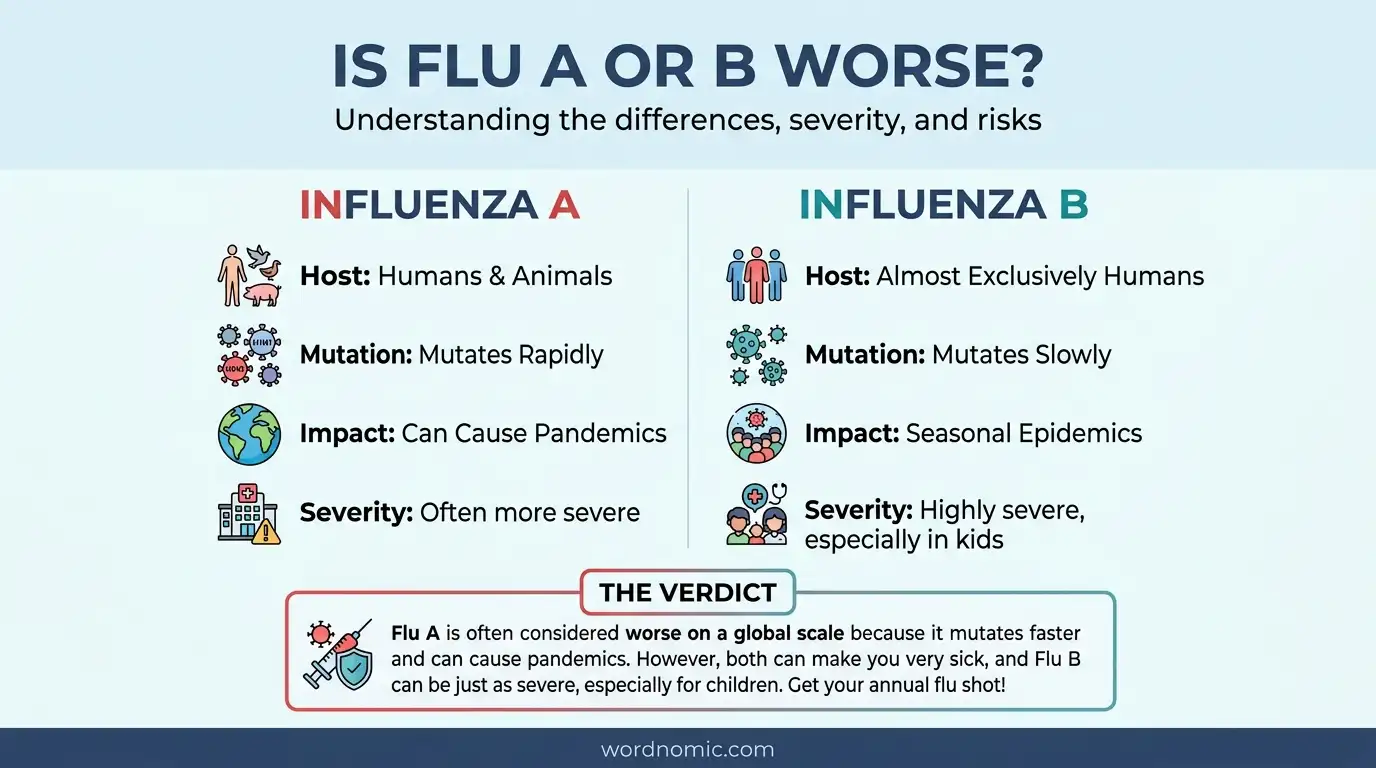
If you have the flu, you may wonder whether type A or type B is worse. Both can make you feel very sick. You may have a fever, a cough, body aches, a sore throat, and strong tiredness.
Flu A is often linked to large outbreaks and pandemics, but flu B can also cause serious illness. Neither type is always worse for every person. How sick you become depends on the virus, your age, your health, and other risk factors. <Cite refs={[“turn785280search6″,”turn785280search2”]}/>
The good news is that most people with seasonal flu recover without needing hospital care. Still, flu can cause serious problems, especially in young children, older adults, pregnant people, and people with certain health conditions.
Knowing the difference between flu A and flu B can help you understand a test result, know what symptoms to watch for, and decide when to seek medical advice.
Is Flu A or B Worse? Quick Answer
Flu A can cause severe illness and is the only type of seasonal human flu known to have caused flu pandemics. However, flu B can also cause severe illness, hospital stays, and death. You cannot tell which infection is worse just from the letter on a test result. <Cite refs={[“turn785280search6″,”turn785280search4”]}/>
Here is the simple difference:
- Flu A: Can infect humans and some animals. It changes over time and can cause seasonal outbreaks and pandemics.
- Flu B: Mainly affects humans and can cause seasonal outbreaks. It can also lead to serious complications.
- Which is worse? Either type can be worse for an individual. Symptoms and health risks matter more than the letter alone.
What Is the Difference Between Flu A and Flu B?
Flu A and flu B are two types of influenza virus that cause seasonal flu in people. Both spread through the air and respiratory droplets or particles from infected people, and both can cause similar symptoms.
The main differences are how the viruses are grouped, which hosts they infect, and their role in outbreaks.
| Feature | Flu A | Flu B |
| Can infect people? | Yes | Yes |
| Can cause seasonal flu outbreaks? | Yes | Yes |
| Can cause severe illness? | Yes | Yes |
| Can cause a pandemic? | Known to have caused flu pandemics | Not known to have caused a flu pandemic |
| Virus groups | Includes subtypes such as H1N1 and H3N2 | Includes lineages such as B/Victoria |
| Symptoms | Fever, cough, aches, and tiredness | Fever, cough, aches, and tiredness |
| Can require hospital care? | Yes | Yes |
These differences come from how influenza viruses are classified. They do not mean that every case of flu A is worse than every case of flu B. <Cite refs={[“turn785280search6″,”turn785280search10”]}/>
Why Can Flu A Be More Concerning?
Flu A gets special attention because some influenza A viruses can change enough to spread widely among people who have little immunity. This is how influenza A viruses have caused pandemics.
Seasonal flu A also includes different subtypes, such as H1N1 and H3N2. The impact of an outbreak can vary based on the virus and how well people’s immune systems recognize it.
However, this does not mean flu A always causes stronger symptoms. A person with flu A may have a mild illness, while another person with flu B may become seriously ill.
The important point is that pandemic potential and the severity of one person’s illness are not the same thing. <Cite refs={[“turn785280search6″,”turn785280search10”]}/>
Can Flu B Be Worse Than Flu A?
Yes. Flu B can cause serious illness, even though it is not known to have caused a flu pandemic.
Both types can lead to complications such as pneumonia. They can also make existing health problems, including asthma or heart disease, worse. Serious flu complications can affect people of different ages, including those who were healthy before becoming ill. <Cite refs={[“turn785280search2″,”turn785280search4”]}/>
For example, a person with flu B who develops pneumonia may become much sicker than a person with a mild case of flu A.
That is why doctors consider symptoms, medical history, and risk factors rather than judging the illness by the test result alone.
Are Flu A Symptoms Worse Than Flu B Symptoms?
Flu A and flu B can cause much the same symptoms. These may start suddenly and include:
- Fever or feeling feverish.
- Cough.
- Sore throat.
- Headache.
- Muscle and body aches.
- Chills.
- Strong tiredness or weakness.
- A runny or blocked nose.
Some people also have vomiting or diarrhea, especially children. Not everyone with flu has a fever.
You cannot reliably tell flu A from flu B by how you feel. A flu test may be needed to identify the type. Even then, the result does not predict exactly how severe your illness will be. <Cite refs={[“turn785280search2″,”turn785280search5”]}/>
Which Type Causes a Higher Fever?
Neither type always causes a higher fever. Both flu A and flu B can cause fever, and the temperature varies from person to person.
A high fever alone does not prove that someone has flu A or that their illness is more dangerous. Consider the person’s overall condition, breathing, ability to drink fluids, and other symptoms.
Seek medical advice if symptoms are severe, getting worse, or causing concern.
Who Is at Higher Risk From Flu A and Flu B?
Both types can cause serious problems, but some people have a higher risk of complications.
These groups include:
- Children under 5, especially those under 2.
- Adults aged 65 and older.
- Pregnant people.
- People with asthma, diabetes, heart disease, or certain other long-term health conditions.
- People with a weakened immune system.
If someone in one of these groups develops flu symptoms, they should contact a healthcare professional early. Antiviral treatment may be recommended, and it works best when started as soon as possible. <Cite refs={[“turn785280search2″,”turn785280search1”]}/>
Being young and healthy lowers some risks, but it does not make serious flu complications impossible.
When Should You Get Medical Help?
Most people recover from seasonal flu, but some symptoms need urgent attention.
Seek emergency medical care if you or someone you care for has:
- Trouble breathing or shortness of breath.
- Ongoing pain or pressure in the chest.
- New confusion, difficulty waking, or a seizure.
- Severe weakness or inability to stay steady.
- Signs of serious dehydration, such as not passing urine.
- Symptoms that improve and then return with a worse fever or cough.
In children, warning signs can also include fast or difficult breathing, bluish lips, ribs pulling in with each breath, or being unusually unresponsive. A baby younger than 12 weeks with a fever needs prompt medical assessment. <Cite refs={[“turn785280search3″,”turn785280search2”]}/>
This list is not complete. Get medical advice if you are worried about severe symptoms, even if they are not listed here.
Does Treatment Differ for Flu A and Flu B?
The basic approach is similar for both types. Rest, fluids, and steps to manage symptoms can help while your body recovers.
A healthcare professional may prescribe antiviral medicine for flu A or flu B. These medicines can make the illness milder and may shorten how long you are sick. They work best when started within about 48 hours after symptoms begin, although treatment may still help later in people who are very sick or at higher risk. <Cite refs={[“turn785280search1″,”turn785280search8”]}/>
Antibiotics do not treat the flu virus itself. They only help with certain bacterial infections when a healthcare professional decides they are needed.
If you are at higher risk, your symptoms are severe, or your condition is getting worse, contact a healthcare professional promptly. Do not wait for a test result before asking for care if you need it.
Can You Prevent Both Flu A and Flu B?
Yes. The seasonal flu vaccine is designed to help protect against the influenza viruses expected to circulate. It may not prevent every infection, but vaccination can reduce the risk of severe illness and complications. <Cite refs={[“turn785280search6″,”turn785280search13”]}/>
Other useful steps include:
- Wash your hands often.
- Cover coughs and sneezes.
- Avoid close contact with people who are sick when possible.
- Stay home when you are ill and follow local health guidance.
- Keep indoor spaces well ventilated when possible.
These steps help reduce the spread of flu, although no single step offers complete protection.
Frequently Asked Questions
1. Is flu A more dangerous than flu B?
Not in every case. Flu A can cause pandemics and serious seasonal outbreaks, but flu B can also cause severe illness and complications. The risk for one person depends on factors such as age, health conditions, the virus involved, and the symptoms that develop.
2. Which flu type has worse symptoms?
Neither type always has worse symptoms. Flu A and flu B can both cause fever, body aches, cough, headaches, and severe tiredness. Symptoms can range from mild to serious with either type. You cannot reliably identify the type or predict severity by symptoms alone.
3. Does flu A last longer than flu B?
There is no simple rule that flu A always lasts longer. Many people recover from the fever and main symptoms within about a week, but cough and tiredness can last longer. The course of illness varies by person and may depend on complications or other health conditions. <Cite refs={[“turn785280search4″,”turn785280search6”]}/>
4. Can flu B cause pneumonia?
Yes. Flu B can cause complications, including pneumonia. Flu A can cause pneumonia too. Seek medical help if you have trouble breathing, chest pain, worsening symptoms, or symptoms that improve and then return more severely. <Cite refs={[“turn785280search2″,”turn785280search4”]}/>
5. Can you get flu A and flu B in the same season?
It is possible to be infected with different influenza viruses during the same flu season. Having one infection does not guarantee protection against the other type. If you become ill again or develop new symptoms, a healthcare professional can help assess the cause.
6. Does a positive flu A test mean I will be sicker?
No. A positive flu A test identifies the type of influenza detected, but it does not tell you how severe your illness will become. Pay attention to your symptoms and risk factors, and seek medical advice if you are at higher risk or feel very unwell.
7. When should I ask a doctor about flu medicine?
Contact a healthcare professional as soon as possible if you are at higher risk of complications, have severe symptoms, or your illness is getting worse. Antiviral medicines work best when started early, ideally within two days of symptom onset, but some people may benefit from treatment later. <Cite refs={[“turn785280search1″,”turn785280search8”]}/>
Conclusion
So, is flu A or B worse? Flu A has the ability to cause pandemics and can lead to serious illness, but flu B can also be dangerous. Neither type is always worse for every person.
Both can cause similar symptoms, including fever, cough, body aches, and tiredness. Both can also lead to complications such as pneumonia. Your age, health, and the symptoms you develop are important when judging how serious the illness may be.
If you have flu symptoms and are pregnant, older, have a long-term health condition, or have a weakened immune system, contact a healthcare professional early. Antiviral treatment may help when started promptly. Seek emergency care for warning signs such as trouble breathing, chest pain, confusion, or severe dehydration.
The best way to lower your risk is to get the seasonal flu vaccine and follow basic steps to reduce the spread of infection. If a test says flu A or flu B, use that result as one piece of information, not as a prediction of how sick you will become.

Welcome to the official author page of Clara Wordsmith, grammar writer at Wordnomic. Clara specializes in explaining confusing English words, grammar rules, spelling differences, and vocabulary topics with clear examples and beginner-friendly explanations.