Have you ever read a story and wondered if it really happened? You may see this question in school, while reading a book, watching a movie, or learning about different types of stories. The answer depends on what the story contains and how the writer presents it.
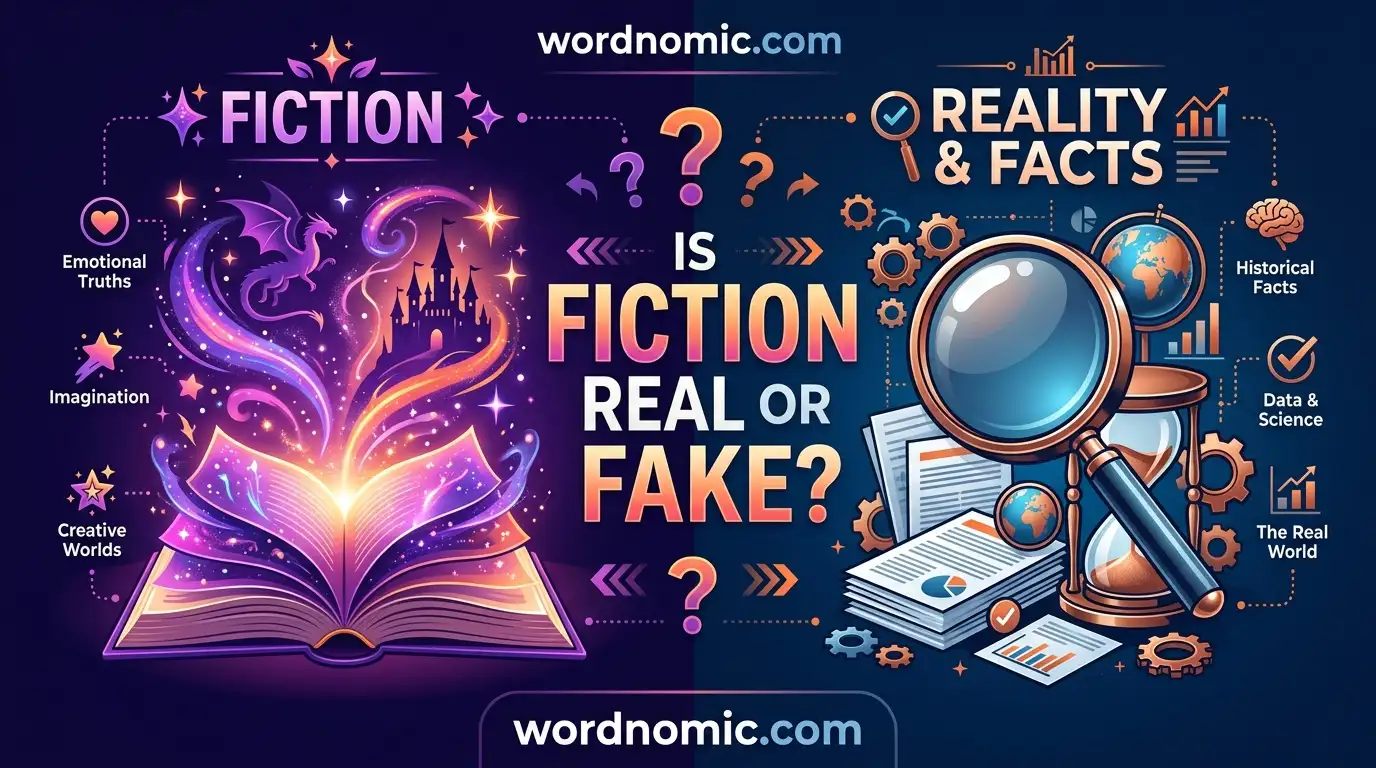
So, is fiction real or fake? Fiction is usually made up by a writer. It tells a story that comes from the imagination. The people, events, and places in a work of fiction may be invented, but some parts can also come from real life.
For example, a story about a boy who finds a magic key is fiction. The boy and the magic key may not exist, but the story can still teach a real lesson about courage or friendship.
Fiction is not the same as a lie. Writers create fiction to entertain readers, share ideas, explore feelings, or tell a meaningful story. The key is that readers understand they are reading an imagined story.
Is Fiction Real or Fake? Quick Answer
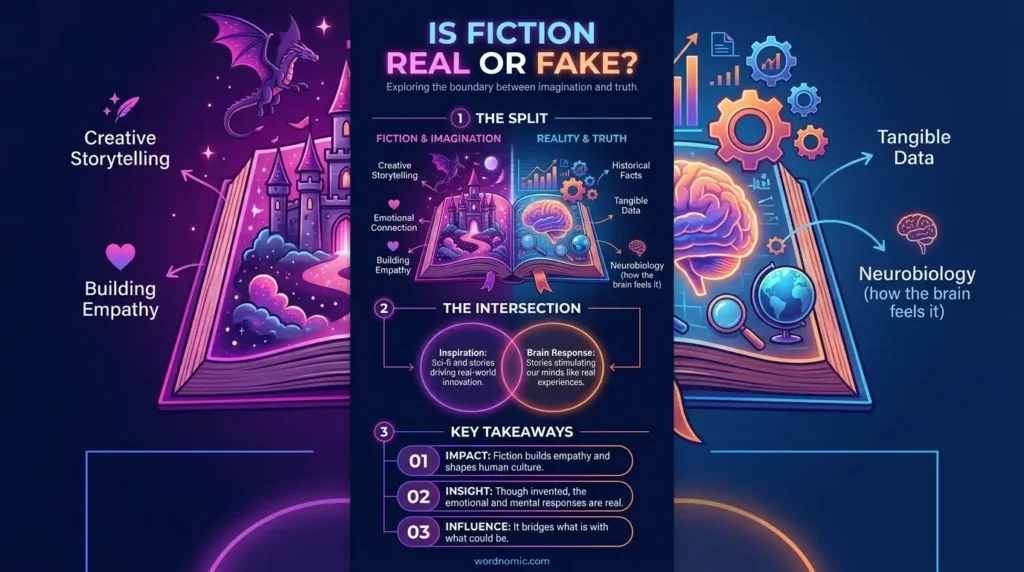
Fiction is generally made up, so its story is not fully real. However, fiction is not automatically a lie.
Fiction can include:
- Made-up people and characters.
- Imaginary places and worlds.
- Events that never happened.
- Real places and events mixed with imagined details.
- Feelings and life lessons that people can relate to.
For example, a story about a talking cat is fiction because cats do not talk like humans in real life. But a story about a family living in New York can also be fiction, even though New York is a real place.
The main difference is that fiction tells an imagined story, while nonfiction aims to present real facts and events.
What Does Fiction Mean?
Fiction is a type of writing or storytelling based on imagination. Authors create characters, events, and plots to tell a story.
Fiction can appear in many forms, including:
- Novels and short stories.
- Fairy tales and folk tales.
- Fantasy books.
- Fiction movies and TV shows.
- Comic books and graphic novels.
- Stories about imaginary worlds.
Some fiction is completely imaginary. Other stories use real people, places, or events as part of an invented plot.
For example, a writer may create a story about a student who attends a real school in London. The school may exist, but the student and the events in the story may be invented.
This is still fiction.
Is Fiction the Same as a Lie?
No. Fiction and lies are different.
A lie is a false statement that someone presents as true to mislead another person. Fiction is an imagined story that is normally shared as a story, not as a record of real events.
For example:
- Fiction: An author writes a story about a dragon who protects a village.
- A lie: Someone claims that a real dragon attacked their village, knowing that the claim is false.
The difference is how the information is presented and whether someone intends to deceive others.
A fictional story can contain false events without being dishonest. However, presenting invented events as real news or real personal experience can mislead people.
What Is the Difference Between Fiction and Nonfiction?
Fiction and nonfiction are two common types of books and other content.
Fiction tells an imagined story. Nonfiction aims to share facts, explain real topics, or describe events that actually happened.
For example, a fantasy novel about a magical kingdom is fiction. A book that explains how the human body works is nonfiction.
| Feature | Fiction | Nonfiction |
| Main purpose | Tell an imagined story | Share facts or explain real life |
| Characters | May be invented | Usually real people when discussing people |
| Events | May be imagined | Intended to describe real events or facts |
| Examples | Fantasy novels, fictional movies | Textbooks, biographies, history books |
| Imagination | Often central to the story | May be used to explain ideas, but facts should guide the content |
There is one important detail: nonfiction can contain mistakes, and fiction can include true facts. The labels describe the type and purpose of the work, not a promise that every detail is correct or invented.
Examples of Fiction and Real Life
The easiest way to understand fiction is to compare imagined stories with real events.
Example 1: A Fairy Tale
A story about a princess who lives in a castle guarded by a talking dragon is fiction. The writer has imagined the characters and events.
Example 2: A Real-Life Biography
A book that tells the story of a real person’s life is usually nonfiction. It aims to describe that person’s actual experiences.
Example 3: A Fiction Movie
A superhero movie may show a person flying through the sky or stopping a moving train with special powers. These events are usually fictional.
Example 4: Historical Fiction
A novel may take place during a real war and include real historical events. The writer may invent the main characters and their personal stories. This is called historical fiction.
Example 5: A School Story
A writer may create a story about a student who wins a school competition. Even if the events seem realistic, the story is fiction if the writer invented them.
These examples show that fiction does not always mean something impossible. A fictional story can look very much like real life.
Can Fiction Be Based on a True Story?
Yes. Fiction can use real events as inspiration.
A writer may learn about a real event and create an imagined story around it. The writer might change names, add characters, create conversations, or invent scenes to make the story work.
This can result in historical fiction, realistic fiction, or a story inspired by real events.
However, a story based on real events is not necessarily a fully true account. Some details may have been changed or invented.
If you want to know whether a book or movie is based on actual events, check its description or the creator’s notes. Look for a clear statement about which parts are real and which parts are imagined.
What Are the Main Types of Fiction?
Fiction comes in many forms. Each type uses imagination in a different way.
1. Realistic Fiction
Realistic fiction tells an invented story that could happen in real life.
For example, a story about two friends who work through an argument at school is realistic fiction. The characters may be made up, but their problems are believable.
2. Fantasy
Fantasy includes magic, imaginary worlds, mythical creatures, or powers that do not exist in the real world.
Stories about wizards, dragons, and magical kingdoms are common examples.
3. Science Fiction
Science fiction explores ideas related to science, technology, space, or the future.
A story about people traveling to another planet may be science fiction. Some ideas may be based on real science, while others are imagined.
4. Historical Fiction
Historical fiction takes place in the past. It may use real historical events or people while adding invented characters and scenes.
Readers can enjoy the story while also learning about a historical setting, but they should not assume every event in the plot is a documented fact.
5. Mystery Fiction
Mystery fiction often focuses on a crime, a secret, or a puzzle that characters try to solve.
The mystery and its characters are usually invented, even when the story takes place in a real city.
How Can You Tell If a Story Is Fiction or Nonfiction?
If you are unsure whether a book, movie, or story is real, try these simple steps.
- Check the label. Look for words such as “fiction,” “novel,” “based on a true story,” or “true account.”
- Read the description. The publisher or creator may explain whether the story is imagined or based on real events.
- Check the source. A history book, biography, novel, and fantasy story have different purposes.
- Look for reliable evidence. If a story makes claims about real people or events, check trustworthy sources.
- Do not judge only by realism. A story can feel real while still being invented.
Remember that realistic details do not prove that a story actually happened. Fiction writers often use real settings, natural dialogue, and believable characters to make their stories feel genuine.
Common Misunderstandings About Fiction
Mistake 1: Thinking All Fiction Is Completely False
Fiction is imagined, but it can include real places, facts, and historical events.
Example: A fictional story set in Paris can describe real streets and landmarks.
Mistake 2: Thinking Fiction Is Always a Lie
Fiction is usually presented as an imagined story. A lie involves presenting something false as true to mislead someone.
Example: Writing a fantasy novel is not the same as claiming that its magical events really happened.
Mistake 3: Believing Every Detail in Historical Fiction Is True
Historical fiction may use real events but invent characters, conversations, and scenes.
Example: A novel about a real king may include private conversations that the author imagined.
Mistake 4: Assuming Nonfiction Is Always Correct
Nonfiction aims to present facts, but authors can make mistakes or use unreliable information.
Example: A history book may contain an incorrect date that later research corrects.
Mistake 5: Thinking Fiction Only Means Books
Fiction can appear in books, movies, TV shows, plays, comics, and other forms of storytelling.
Example: An invented TV drama is fiction even though it is shown on a screen rather than printed in a book.
Is Fiction Real or Fake in Movies and Books?
In movies and books, fiction usually means the story or plot is invented. However, the setting, characters, or events may include real elements.
A fictional movie might use a real city, show real historical buildings, or mention actual events. That does not make the whole story nonfiction.
Likewise, a book can have a realistic plot without describing something that truly happened.
When a movie says it is “based on a true story,” that means real events inspired it. It does not always mean every scene is accurate. Check reliable accounts if you need to know which parts are documented.
Frequently Asked Questions
1. Is fiction real or fake?
Fiction is usually made up through imagination. Its characters and events may not have happened in real life. However, fiction is not automatically a lie because it is normally presented as an invented story. It can also contain real places, facts, and events.
2. Does fiction mean something is not true?
Fiction means that a story is imagined or created rather than presented as a factual account. Some details may be true, but the plot or characters may be invented. For this reason, fiction is not always completely false, even though it is not meant to be a full record of real events.
3. Is fiction the opposite of nonfiction?
Yes, fiction and nonfiction are commonly treated as opposite types of writing. Fiction tells imagined stories, while nonfiction aims to present facts and real events. Still, nonfiction can contain errors, and fiction can include true details. The main difference is the purpose and presentation of the work.
4. Can fiction contain real people?
Yes. Some fictional stories include real historical figures or public figures. The story may also invent conversations or events involving them. Readers should not assume that every scene is true simply because a real person appears in it. Historical records and reliable sources can help confirm factual details.
5. Is a movie based on a true story fiction or nonfiction?
It depends on how the movie presents its story. A dramatized movie based on real events often uses fictional scenes, changed details, or invented dialogue. A documentary aims to present real events and evidence. The description and reliable sources can help you understand how much of the movie is factual.
6. Why do people read fiction if it is made up?
People read fiction for fun, excitement, comfort, and new ideas. Stories can help readers imagine different places, understand characters, and think about real-life feelings or problems. Even when events are invented, a story may explore themes such as friendship, fear, hope, or courage.
7. What is an example of fiction?
A story about a child who discovers a hidden door to a magical world is an example of fiction. The child, the door, and the magical world may all be invented. A novel about an imaginary detective solving a made-up crime is another example of fiction.
Conclusion
So, is fiction real or fake? Fiction is usually made up, but it is not the same as a lie. It is a form of storytelling that uses imagination to create characters, events, and plots.
Some fictional stories take place in imaginary worlds. Others look like real life or use actual places and historical events. A writer may even base a story on something that truly happened while changing details or adding imagined scenes.
Nonfiction is different because it aims to share facts and describe real events. Still, nonfiction can contain errors, so important claims should be checked when accuracy matters.
The easiest way to remember the difference is this: fiction is created as an imagined story, while nonfiction aims to tell or explain real things. If a book or movie says it is based on a true story, do not assume every detail is accurate. Check its description and compare important claims with reliable sources.
Fiction may not describe events that truly happened, but it can still share ideas and feelings that matter in real life.

Emily Carter is an English grammar writer based in Portland, Oregon, with 7+ years of experience turning tricky grammar rules into simple, easy lessons.










