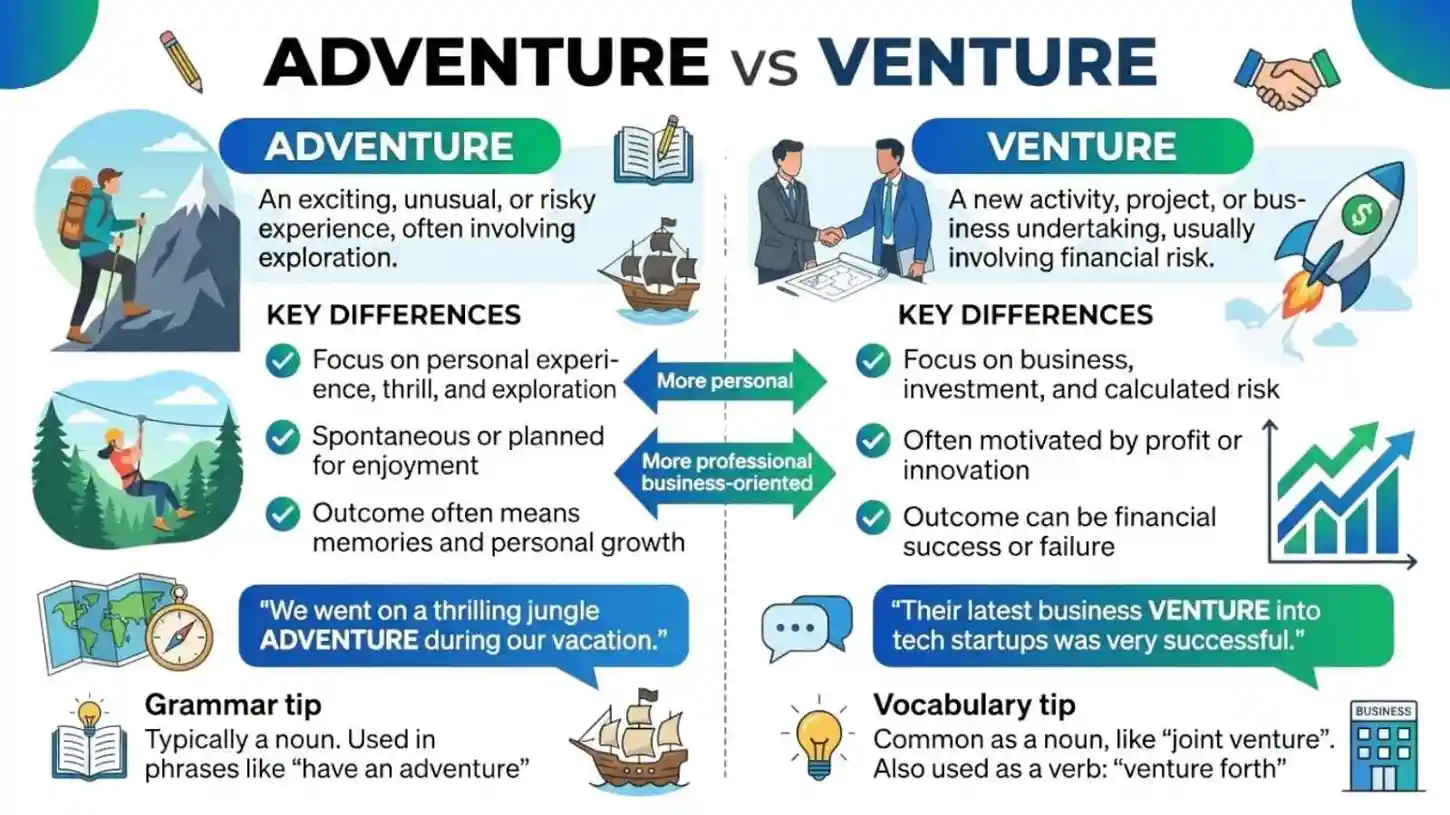
Here it is, right away.
Adventure means an exciting trip or experience. It often feels fun, bold, or a little risky, like a hike, a trip, or a big life event.
Venture means a new plan or project, often tied to business or money. It can also mean to go somewhere new or risky, as an action.
Easy examples:
- “We went on a fun adventure in the mountains.” (a bold, fun trip)
- “She started a new business venture last year.” (a new project)
Both words share a feel of risk and newness. But they are used in different ways.
Why People Mix These Up
Both words feel close, since both talk about doing something new or a bit risky. Your mind may jump between them, especially since “venture” even hides inside the word “adventure.”
This mix-up makes sense once you look closely. “Adventure” always points to an exciting event or trip. “Venture” more often points to a plan, a project, or a business step, though it can also mean going somewhere new. Once you see this small split, it becomes easy to pick the right word.
Where These Words Came From
Both words come from the same old root. They trace back to a Latin word that meant “to arrive” or “to happen.” Over time, this root grew into two paths in English.
Venture came first, keeping close to a simple, bold meaning: to take a risk, or to go somewhere new. Business use grew fast, since starting a new company always feels like taking a risk, much like heading into unknown land.
Adventure grew out of “venture” too, but it picked up a fuller, more exciting feel. Long ago, “adventure” meant something that “happens to you,” almost like fate or luck. Over time, it grew into the word we use today, tied to exciting trips, bold stories, and big life events.
So even though both words share one old root, they grew into two different jobs in English: one tied to bold plans and business, and one tied to fun, exciting experiences.
A Closer Look at Each Word
Adventure almost always feels positive and exciting. Think hiking a mountain, exploring a new city, or reading a story full of danger and fun. The word carries a sense of joy, even when there’s some risk involved.
Venture feels more serious and planned. Think starting a company, entering a new market, or backing a new idea with money. The word carries a sense of risk too, but it’s tied more to careful planning than to fun or excitement.
Both words share the idea of stepping into the unknown. But adventure leans toward fun and excitement, while venture leans toward planning and risk in a more serious setting.
Side-by-Side Table
| Word | Type | Meaning | Example |
| Adventure | Noun | An exciting trip or experience | “Their trip to Peru was a real adventure.” |
| Venture | Noun | A new plan or business project | “The new venture needed funding fast.” |
| Venture | Verb | To go somewhere new or risky | “They chose to venture into new markets.” |
| Adventurous | Adjective | Willing to try new or bold things | “She has always been adventurous.” |
A Simple Way to Remember
Try this trick: adventure has “fun” hiding in its feel, since it almost always ties to trips, stories, and exciting moments.
Venture feels more like “work,” since it often ties to business, money, and careful planning.
Easy rule: fun trip or bold story? Use “adventure.” New business plan or risky step? Use “venture.”
Common Mistakes People Make
Mistakes
1: Wrong: “She started a new business adventure last year.” Fix: “She started a new business venture last year.” (Business plans use “venture,” not “adventure.”)
2: Wrong: “Our trip to the mountains was a real venture.” Fix: “Our trip to the mountains was a real adventure.” (Fun trips use “adventure,” not “venture.”)
3: Wrong: Using both words the same way in writing without checking the setting. Fix: Always check if you’re talking about a fun trip (adventure) or a planned project (venture).
4: Wrong: “He decided to adventure into a new career.” Fix: “He decided to venture into a new career.” (Taking a bold career step uses the verb “venture.”)
Everyday Examples
In a travel blog: “Our weekend adventure through the forest left us with memories we’ll never forget.”
In a business article: “The startup’s new venture into clean energy has drawn a lot of investor interest.”
On social media: “Off on another adventure! This time, we’re headed to the coast. 🌊”
In a work email: “We’re excited to announce our new venture into the wellness industry.”
Search Trends and Usage Data
People search “adventure or venture” for a few common reasons.
- Travel writers and readers: Many searches come from people writing or reading about trips, wanting to confirm “adventure” is the right word for exciting travel stories.
- Business writers: Others search this while writing about new projects, wanting to confirm “venture” fits business and money-related plans.
- Students and English learners: This pair often confuses learners, since “venture” hides right inside “adventure,” making the link between the words feel a little blurry at first.
Both words stay in steady, common use, just in very different types of writing.
Why Getting This Right Matters
In casual talk, mixing these words up rarely causes a big problem. Most people still understand what you mean. But in careful writing, like a business plan or a travel article, picking the wrong word can feel a little off to a careful reader.
Imagine a business report that says “our new adventure has raised $2 million in funding.” A sharp reader might pause, since “adventure” doesn’t usually fit serious business language the way “venture” does. Picking the right word helps your writing feel clear, correct, and professional.
Frequently Asked Questions
1. Can “venture” ever describe a fun trip? Not usually. “Venture” leans toward business or bold, planned action, while “adventure” is the word most often used for fun or exciting trips.
2. Can “adventure” ever describe a business plan? It’s less common, but sometimes used loosely to make a business plan sound exciting. Still, “venture” remains the standard, expected word in business writing.
3. Is “venture capital” related to this word? Yes. “Venture capital” is money given to new, risky business projects, which is exactly why “venture,” not “adventure,” fits this term.
4. Why does “venture” hide inside the word “adventure”? Both words share the same old root, tied to the idea of something new or risky happening. Over time, they grew into two separate words with two separate uses.
5. Is one word more formal than the other? Not exactly. “Venture” tends to show up more in formal, business writing, while “adventure” shows up more in casual, travel, or story-based writing.
6. Can both words apply to the same event? Sometimes, yes. A new business project could technically be called both an “adventure” and a “venture,” though “venture” remains the more accurate, standard word for business settings.
7. Is there an easy way to remember the difference? Yes. Adventure feels like fun and travel. Venture feels like work and planning. If you’re picturing excitement, choose adventure. If you’re picturing risk and business, choose venture.
The Bottom Line:
Adventure or venture? Both words share the same root, but they serve very different purposes. Adventure points to exciting trips, bold stories, and fun experiences. Venture points to new plans, business projects, and risky steps, often tied to money or careful planning.
Next time you’re not sure which one fits, think about whether you’re describing something fun and exciting, or something planned and risky in a business sense. That one quick check will guide you to the right word almost every single time.

Emily Carter is an English grammar writer based in Portland, Oregon, with 7+ years of experience turning tricky grammar rules into simple, easy lessons.