You rent an apartment. You need to move out early. But your lease is not over yet. A friend says, “just sublet it.” Another friend says, “you need a sublease.” Are these the same thing?
Many renters ask this question. People search “sublet vs sublease” because the two words sound almost the same. People often use them to mean the same thing in daily talk. But in legal papers, they are not always equal.
This question matters a lot. If you get it wrong, you could face extra costs or problems with your landlord.
This guide gives you a simple answer first. Then it shows where each word comes from. It shows how each one is used in real life and in legal papers. By the end, you will know which word fits your situation.
Sublet or Sublease – Quick Answer
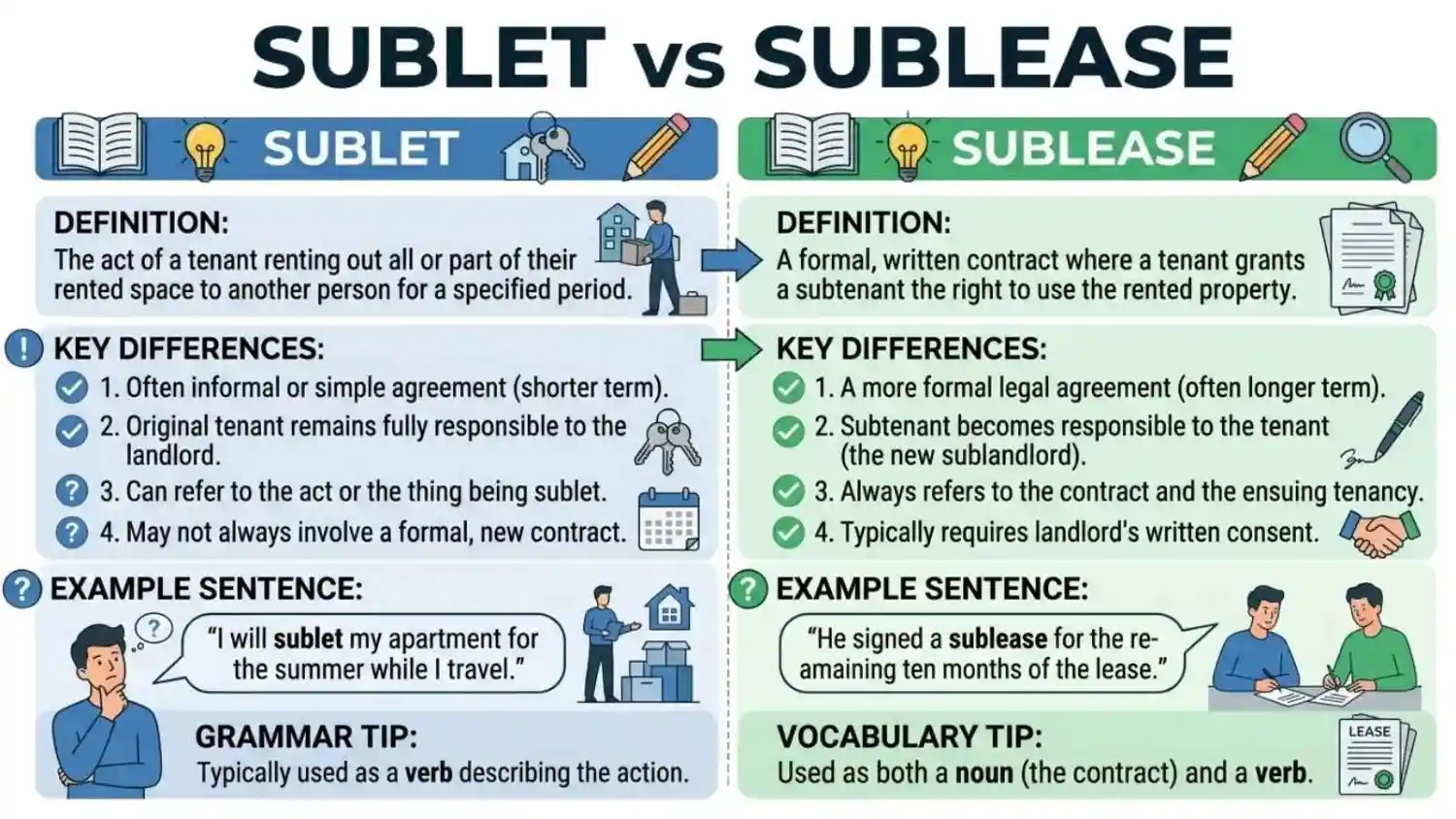
Sublet usually means the act of renting out your space to someone else, while you are still under your own lease.
- “I’m subletting my apartment for the summer.”
- “She found a sublet near her college for one semester.”
Sublease usually means the written agreement behind that arrangement. It is the legal paper.
- “We signed a sublease agreement before the new person moved in.”
- “The sublease lists the rent, dates, and rules.”
In daily talk, people often use both words the same way. In legal talk, “sublease” usually means the paper. “Sublet” usually means the action.
Where Do These Words Come From?
Both words start with “sub-,” which means “under” or “second.”
Sublet comes from “let,” an old word for “to rent out.” People have used “let” for hundreds of years to mean renting out space. “Sublet” simply means renting out a space that you are already renting.
Sublease comes from “lease,” a word for a formal rental contract. “Lease” comes from an old Latin word. A “sublease” is a second lease, made under the main one.
This is why “let” connects to action, and “lease” connects to paperwork. That small difference still shows up today, even though many people now use both words the same way.
Formal Paper vs Everyday Talk
There is no real difference here between British and American English. The real difference is between casual talk and formal paperwork.
| Feature | Sublet | Sublease |
| How it’s used | Everyday talk | Legal papers |
| What it means | The act or deal | The written agreement |
| Paperwork needed | Sometimes, sometimes none | Usually a signed paper |
| Common for | Short or casual rentals | Long or formal rentals |
| Used by | Renters, students, roommates | Landlords, property managers |
Both American and British English use “sublet” and “sublease” with almost the same meaning. The real difference is about how formal the talk is, not which country you live in.
Which Word Should You Use?
Talking in everyday conversation? Use a sublet. It works well for casual talk about renting out your space.
Dealing with paperwork or a contract? Use sublease. It is the better word when a landlord or legal paper is involved.
Planning to rent out your space? Check your lease first. Some leases need a real sublease paper, even if it feels like a simple sublet.
Are you a landlord or property manager? Always use “sublease” in your papers, since it points to a real legal agreement.
Common Mistakes People Make
- Mistake: Thinking “sublet” and “sublease” always mean the exact same thing.
- Fix: In casual talk, yes. In legal talk, “sublease” usually means the paper.
- Mistake: Subletting your space without checking your own lease first.
- Fix: Always read your lease before agreeing to any sublet.
- Mistake: Thinking a sublet removes your duty to your landlord.
- Fix: In most cases, you are still responsible for rent and damage.
- Mistake: Skipping a written paper because the deal feels small or short.
- Fix: Even a short sublet should have a simple written agreement.
- Mistake: Mixing up a sublease with breaking your lease.
- Fix: A sublease keeps your lease active. Breaking a lease ends it.
Sublet and Sublease in Everyday Life
In an email: “Hi, I’m looking for someone to sublet my apartment for three months. I can send the sublease paper once we agree.”
In a news headline: “City Adds New Rules for Short-Term Sublets Near Colleges”
On social media: “Looking for a sublet starting June 1st! Furnished room, close to school. DM me.”
In formal writing: “The tenant must not sublease the unit without written approval from the landlord.”
Among roommates: “My roommate found a sublet for the summer, so we signed a simple sublease to make it official.”
How Popular Are These Words?
People search “sublet vs sublease” more during spring and summer, right after school terms end. Most people searching this are:
- Students looking for short housing while away from school.
- Renters moving for work and needing someone to take over rent.
- Landlords checking the right legal terms.
Here is a simple look at the difference:
| Word | Best Used For | Common Users |
| Sublet | Casual talk, short deals | Renters, students, roommates |
| Sublease | Legal papers, formal deals | Landlords, property managers |
| Subletting | The act of renting out a space | Everyday conversation |
| Subtenant | The person renting from the main tenant | Legal and rental talk |
FAQs:
1. Is sublet the same as sublease? They are close, but not always the same. “Sublet” usually means the action. “Sublease” usually means the paper.
2. Do I need a written sublease to sublet my place? Yes, it’s a good idea. A written paper protects you and the other person.
3. Can I sublet without asking my landlord? Usually no. Most leases need landlord approval first.
4. Am I still responsible for rent if I sublet my place? Yes, in most cases. You stay responsible unless your lease says something different.
5. What is a subtenant? A subtenant is the person who rents from you under a sublet or sublease deal.
6. Is “sublease” only used in legal papers? Mostly, yes. It shows up far more in formal and legal talk than casual talk.
7. Can I sublease only one room, not the whole place? Yes. You can sublease the whole unit or just one room.
Conclusion:
“Sublet vs sublease” is not about spelling. It is about how formal the situation is. “Sublet” means the everyday act of renting out your space. “Sublease” means the written paper behind that deal.
There is no real difference here between British and American English. Both words are used the same way in the US, UK, Canada, and Australia. The real difference comes from how formal your situation is, not where you live.
Remember this simple rule: talking casually? Use “sublet.” Dealing with paperwork or a landlord? Use “sublease.” And no matter which word you use, always check your lease first and put your deal in writing. That one step keeps you, your subtenant, and your landlord all safe.