You are writing something. You stop. Is it “esthetically”? Or “aesthetically”? Both look almost the same. Both sound the same too. This small stop happens to a lot of people, even good writers.
People look this up a lot. These two words look close. But most people only use one of them. This makes people feel unsure, mostly when writing something that needs to look right, like a work email or a school paper.
You may worry you picked the wrong one. You may just want a fast, clear answer. Good news. This is easy to learn once someone breaks it down for you.
This guide keeps it simple. You will learn what each word means. They will see easy examples. You will get one clear rule to help you pick, every time you write.
The Quick Answer
Here it is, in one line.
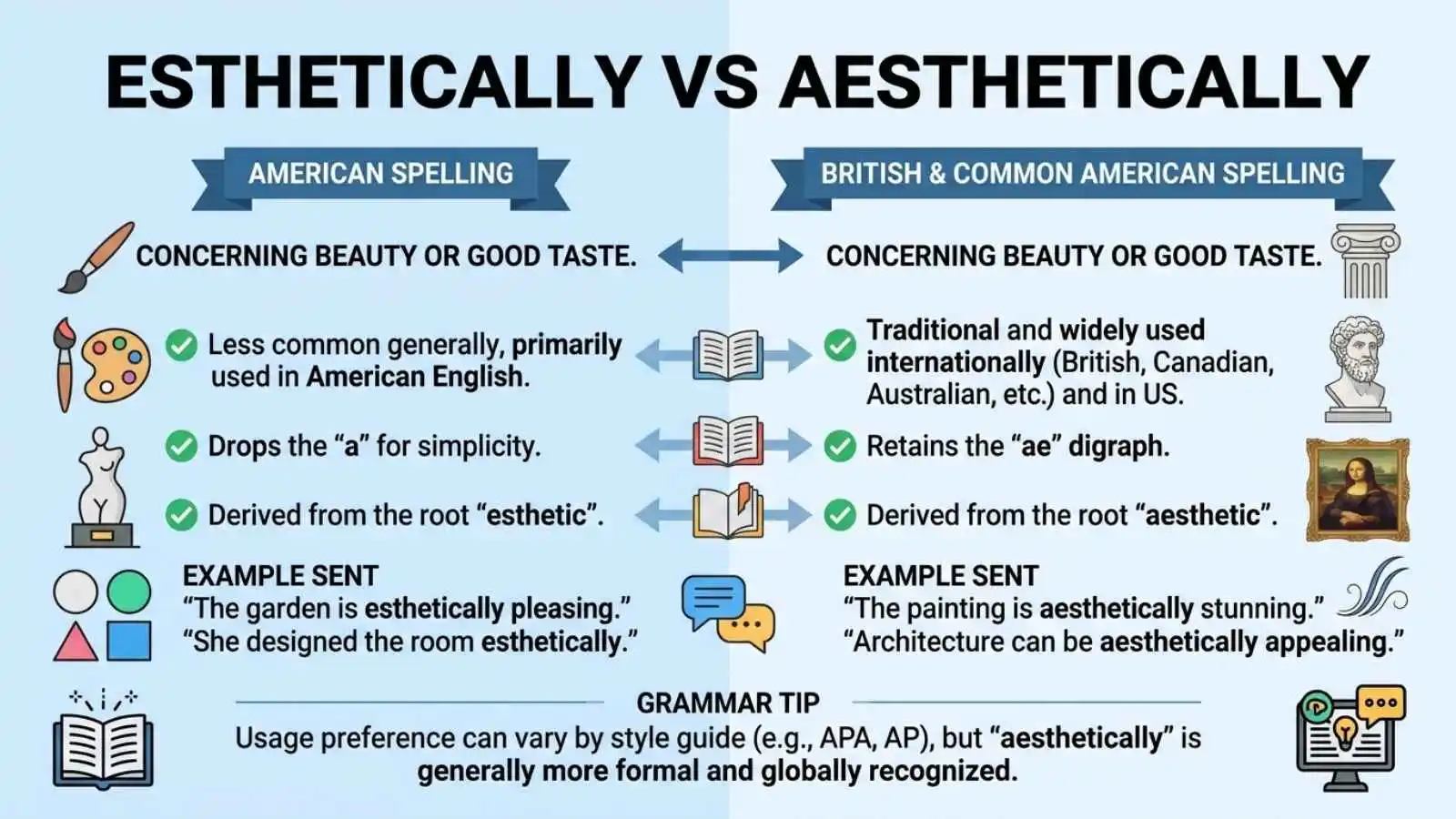
Aesthetically is the word almost everyone uses. It means “in a way that looks nice or has good style.” This is the safe, normal pick for nearly all writing.
Esthetically is a shorter way to spell the same word. It means the same thing. But very few people use it. It mostly shows up in skin care work, where the job title is “esthetician.”
Easy examples:
- “The new house looks aesthetically nice.” (the word almost everyone uses)
- “She works as an esthetician.” (a skin care job title)
In short: both words mean the same thing. Both are real and correct. But “aesthetically” is the safe pick almost every time. “Esthetically” belongs to one small job area: skin care.
Where These Two Words Came From
Both words grew from one old word. But small changes over time made two forms.
The word first came from Greek. It meant “linked to feeling things.” This grew into the word “aesthetic” in English, a long time ago. People used it to talk about beauty, art, and style.
Over time, some words in English got shorter. This is how “esthetic” came to be. It’s just a short form of “aesthetic.” Both mean the same thing. But “aesthetic” stayed the normal word almost everywhere, in books, ads, design talk, and daily writing.
The short word, “esthetic,” found a small, steady home in skin care work. Short words often feel easy to use in hands-on jobs. This is likely why the job name “esthetician” uses the short form. But “aesthetically” stays the normal word almost everywhere else, in every other type of writing.
This kind of thing happens a lot in English. One small job area keeps an old or short word. The rest of English moves on and picks the newer, more common form. Once a word gets tied to a job title or a school class, it tends to stay locked in place. This is just what happened here. Skin care schools picked the short word a long time ago. It stuck. It’s still used today, mostly in that one field.
You can see this same pattern in other fields too, not just skin care. Certain jobs and industries hang on to older spellings or shorter word forms simply because that’s what got written into early training books, licenses, and official paperwork. Once that happens, changing it later becomes hard, since so many official documents and job titles already use the older spelling.
British English vs American English Spelling
Here’s some good news. This is not a true UK vs US spelling case, like “color” and “colour.” Both “esthetic” and “aesthetic” show up in both places at times. The real split here is about how common each word is, not about which country you live in.
| Word | Where It’s Used | Example Sentence |
| Aesthetically | US and UK, all normal writing | “The room looks aesthetically nice.” |
| Esthetically | Rare, mostly US skin care work | “She studies esthetically driven skin care.” |
| Aesthetician | Rare job title | “He works as an aesthetician.” |
| Esthetician | Common US job title | “She trained as an esthetician.” |
As you can see, “aesthetically” wins in almost every normal writing case, in both American and British English. “Esthetically” only shows up in skin care jobs, mostly in the US.
Which One Should You Actually Use?
Your pick depends on who is reading your writing, and what kind of writing it is.
Writing for most US readers? Use “aesthetically.” It’s safe for blogs, emails, and school work.
Writing for UK readers? Also use “aesthetically.” It’s the normal word there too, no real debate.
Writing about skin care or spa work? You may use “esthetically” or “esthetician.” This is normal in that one job area.
Not sure at all what to pick? Always use “aesthetically.” It’s the safe pick almost everywhere, and it will never look wrong to a reader.
Easy rule to remember: When you’re not sure, pick “aesthetically.” Save “esthetically” only for skin care writing, and only if you’re already in that world.
Words That Come From the Same Root
These are just other forms of the same base word, and they follow the same rule.
Aesthetic means something linked to beauty or style. “The design has a clean, modern aesthetic.”
Esthetic is the short form, again mostly seen in skin care. “She completed her esthetic training last year.”
If you already understand “aesthetically” and “esthetically,” these related words are just as easy to handle.
Common Mistakes People Make
Mistakes
1: Wrong: “The website looks esthetically clean.” Fix: “The website looks aesthetically clean.” (Normal writing should use “aesthetically.”)
2: Wrong: “She trained as an aesthetician.” Fix: “She trained as an esthetician.” (This job title almost always uses the short spelling in the US.)
3: Wrong: Using both spellings in one piece of writing with no clear reason. Fix: Pick one spelling and stay with it, unless you’re using a job title like “esthetician.”
4: Wrong: “Esthetically speaking, this painting uses bold colors.” Fix: “Aesthetically speaking, this painting uses bold colors.” (Art talk should use “aesthetically.”)
5: Wrong: Thinking “esthetically” is just a spelling mistake. Fix: It’s a real, correct word. It’s just used mostly in one small field.
6: Wrong: “Our brand is esthetically driven.” Fix: “Our brand is aesthetically driven.” (Brand and design writing should use “aesthetically.”)
Everyday Examples
In an email: “I love the new layout. It feels much more aesthetically balanced than the old one.”
In news writing: “The updated museum wing has been praised for its aesthetically bold use of light and space.”
On social media: “Just booked my first facial with an esthetician near me! Can’t wait. “
In school writing: “This paper looks at how aesthetically pleasing packaging can change what people choose to buy.”
A Simple Trick to Remember
If you ever forget which one to use, picture this: “aesthetically” has the extra letter “a” at the front, just like the word “art.” Both start with A, and both are tied to beauty and style. That small link can help you remember which spelling to reach for by default.
For “esthetically,” picture the word “esthetician” instead, since that’s really the only place you’ll see this shorter spelling used regularly. If you’re not writing about skin care, you likely don’t need this word at all.
Search Trends & Usage Data
People search “esthetically vs aesthetically” mostly to check their spelling before sending or posting writing.
- United States: Most people want to confirm that “aesthetically” is right for normal writing. Some also search “esthetician” for job info.
- United Kingdom: Very few people use “esthetically” here. “Aesthetically” is the clear, normal pick almost every time.
- Skin care field: Steady, ongoing interest in “esthetician” training and jobs, which keeps the short word alive in that one area.
Overall, “aesthetically” is used far more, in almost every kind of writing. “Esthetically” mostly lives on through skin care work.
Quick Comparison Table
| Word | Where Used | How Common | Example |
| Aesthetically | All writing, worldwide | Very common | “It looks aesthetically nice.” |
| Esthetically | US skin care field | Rare | “Esthetically driven skin care.” |
| Aesthetician | Rare job title | Rare | “He is an aesthetician.” |
| Esthetician | Common US job title | Common in that field | “She is an esthetician.” |
Frequently Asked Questions:
1. Is “esthetically” a real word or a mistake? It’s real. It’s just a short word used mostly in skin care work, not a spelling error.
2. Which word should I use in school work? Use “aesthetically.” It’s the normal, expected word for school and everyday writing.
3. Why do skin care workers say “esthetician”? This short word became the normal job name in US skin care over time, even though “aesthetically” stays standard everywhere else.
4. Do people in the UK ever use “esthetically”? Almost never. UK writing uses “aesthetically” almost every single time.
5. Can I use both words in one piece of writing? Try not to. Pick one and stay with it, unless you’re using a job name like “esthetician.”
6. Does spell-check flag “esthetically” as wrong? Sometimes, yes, since it’s used less. But it’s still a real word, just less common.
7. Which word is the safe pick if I’m not sure at all? Pick “aesthetically.” It works right in almost every setting, and it never looks wrong to a reader.
8. Is there ever a downside to always picking “aesthetically”? Not really. The only time it might feel slightly off is when you’re deep in skin care writing, where “esthetically” is the expected, industry-standard word.
The Bottom Line:
Esthetically vs aesthetically? Both words mean the same thing, and both are correct. But “aesthetically” is used far more, and it’s the expected spelling in almost all writing, from blogs to work reports to school papers. “Esthetically” mostly lives on through skin care work, mostly in job titles like “esthetician.”
Just remember: when you’re not sure, pick “aesthetically.” It works safely almost everywhere and won’t confuse your reader. Save “esthetically” only for skin care writing, where it stays the normal, expected word.
Next time you pause over this spelling, you’ll know exactly what to pick. This keeps your writing clear, correct, and easy to trust, every single time you write. And if you ever forget, just remember the small trick from earlier: “aesthetically” starts with A, just like “art,” and that’s usually all you need to make the right call.