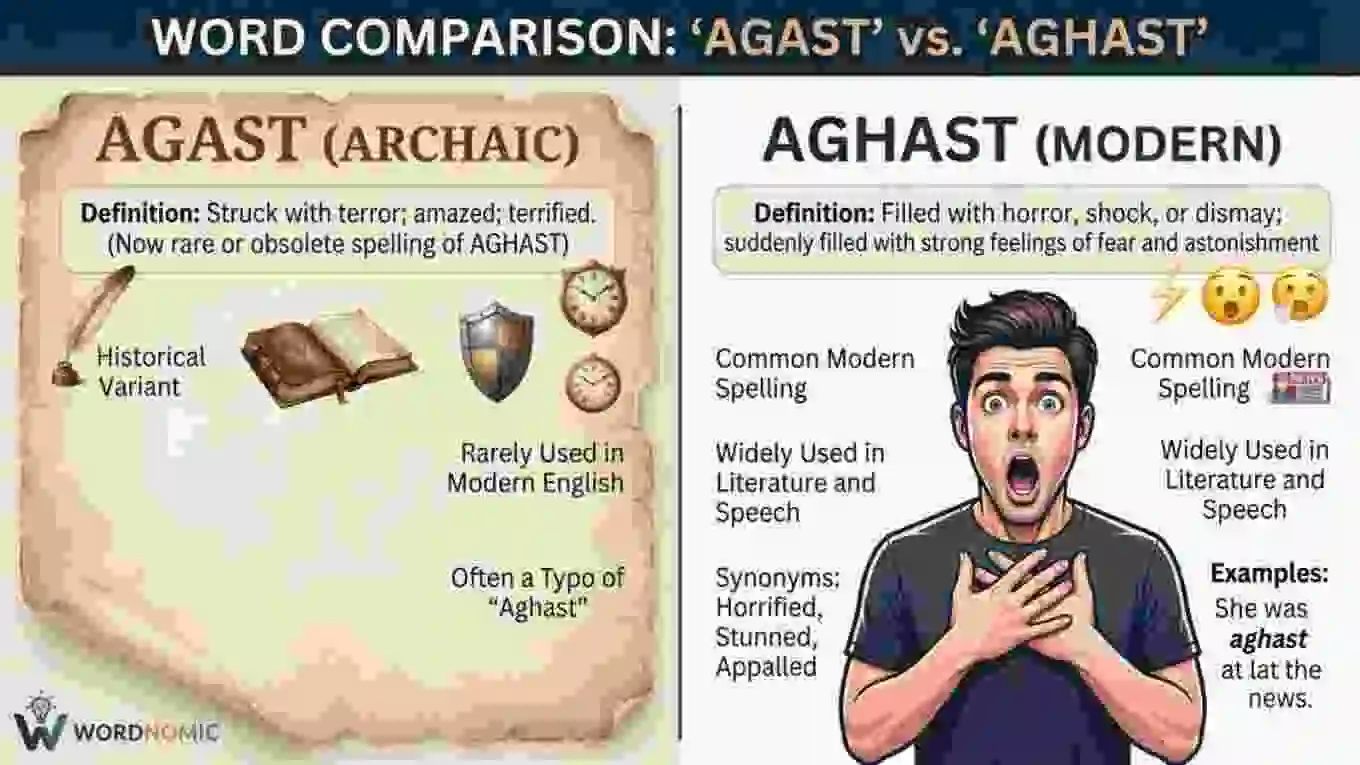
Have you ever wanted to write “aghast” but stopped because you were not sure about the spelling? You are not alone. Many English learners type “agast” when they mean “aghast.”
The two forms look very close. But they do not have the same status in standard English. Aghast is the correct standard spelling. Agast is usually a spelling mistake.
The word aghast describes a strong feeling of shock, fear, or horror. It often describes how someone feels after seeing or hearing something very bad or surprising.
For example:
She was aghast when she saw the damage.
In this article, you will learn the difference between agast and aghast, their meanings, spelling, pronunciation, history, common mistakes, and correct examples. You will also learn when and how to use aghast in everyday English.
If you often confuse these two words, this guide will help you remember the correct form.
Agast or Aghast: Quick Answer
Aghast is the correct spelling.
Agast is not the standard spelling of this word. It is usually a misspelling of aghast.
| Word | Correct? | Meaning |
| Aghast | ✅ Yes | Very shocked, scared, or horrified |
| Agast | ❌ No | Usually a misspelling of aghast |
Correct example
I was aghast at the news.
Incorrect example
I was agast at the news.
The key spelling to remember is:
A-G-H-A-S-T
What Does Aghast Mean?
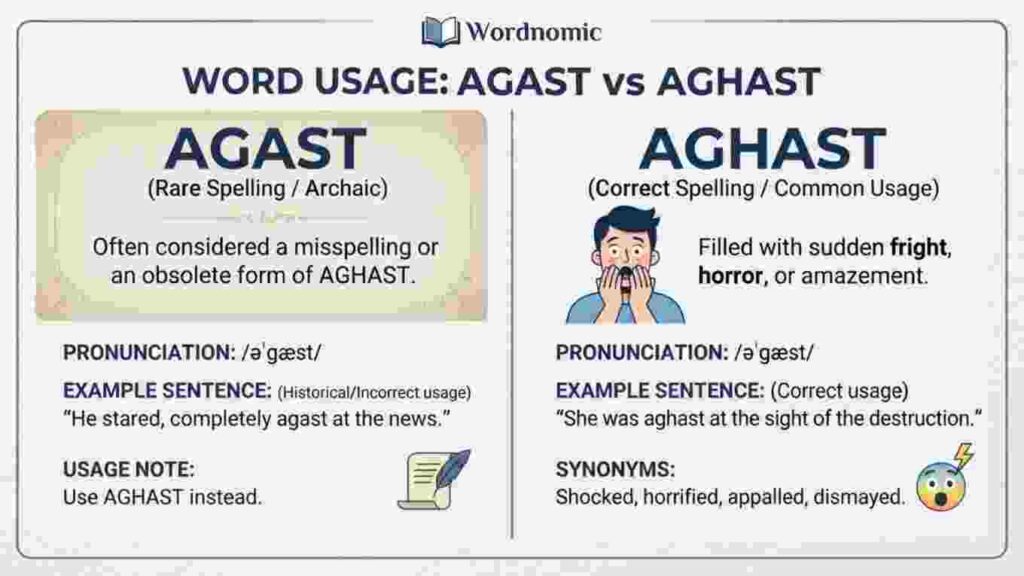
Aghast is an adjective.
It means very shocked, frightened, or horrified by something.
You can use it when something causes a strong feeling of fear or shock.
Examples
- She looked aghast at the terrible news.
- He was aghast when he saw the broken window.
- The parents were aghast at what had happened.
- We stood aghast after hearing the story.
- I was aghast by the sudden change.
The word often describes a strong reaction.
What Does Agast Mean?
Agast is not the standard spelling of the English word you are looking for.
People may write agast because they do not hear the h sound clearly in aghast.
The correct word is:
Aghast
So, if you want to say that someone is very shocked or horrified, use aghast.
Example
Correct:
She was aghast at the price.
Not:
She was agast at the price.
Aghast Meaning in Simple English
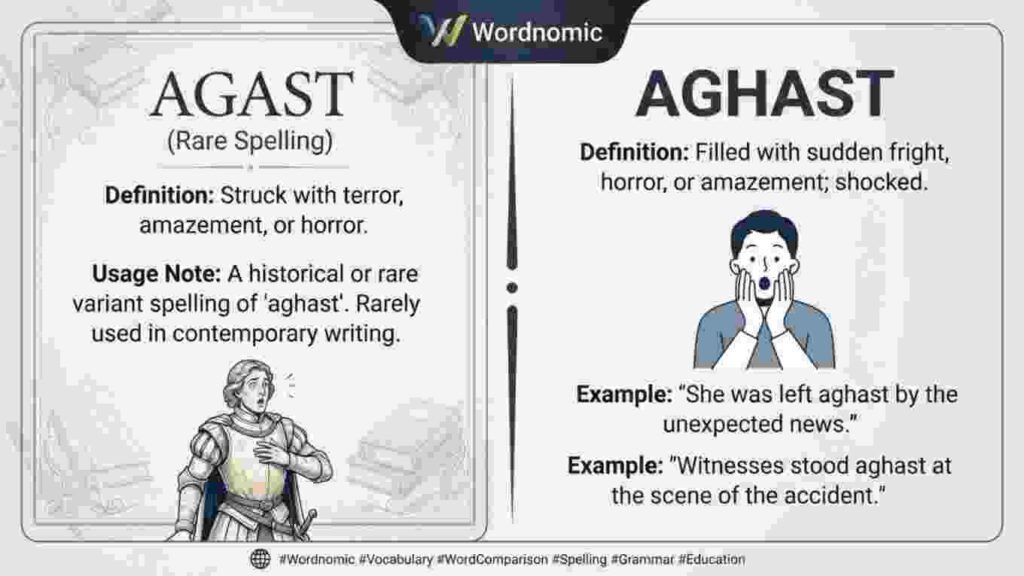
You can think of aghast as:
very shocked + very upset + sometimes very scared
For example, imagine that someone sees a serious accident. They may feel aghast.
Another example is when someone hears very bad news and cannot believe what they have heard.
Simple meaning
Aghast = extremely shocked or horrified
Aghast as an Adjective
An adjective gives information about a person, place, thing, or feeling.
Examples
- She was aghast.
- He looked aghast.
- They stood aghast.
- The crowd was aghast at the news.
You will often see aghast after verbs such as:
- was
- were
- looked
- seemed
- stood
- remained
Examples
He looked aghast.
They stood aghast.
She was aghast at the sight.
Aghast vs Shocked
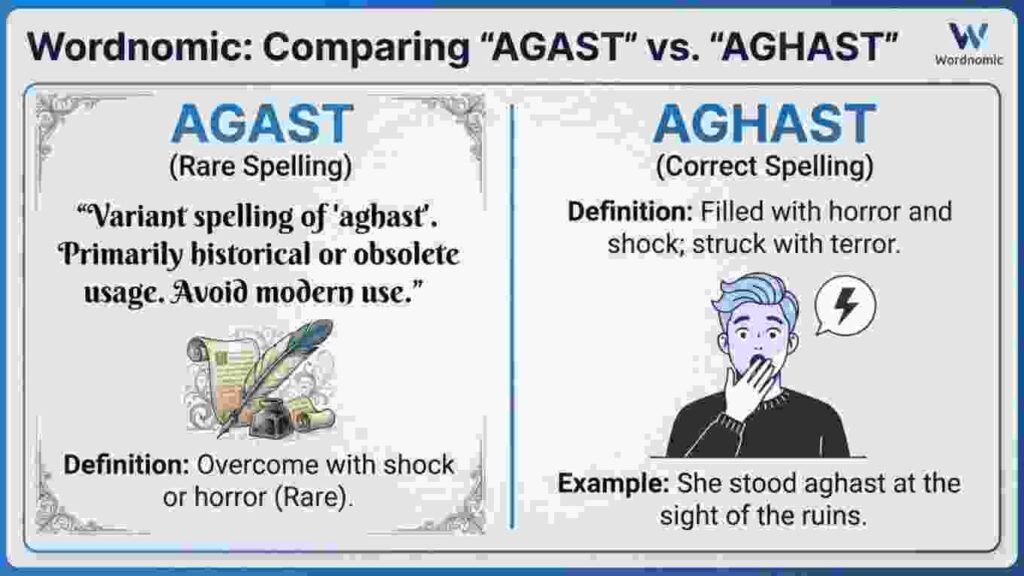
Aghast and shocked have similar meanings, but aghast often shows a stronger reaction.
Shocked
Shocked means very surprised or upset.
I was shocked by the news.
Aghast
Aghast suggests deep shock, fear, or horror.
I was aghast at what I saw.
Both words can work in some situations. However, aghast often sounds stronger and more dramatic.
Aghast vs Horrified
Horrified means very frightened, shocked, or disgusted by something terrible.
Aghast has a similar meaning.
She was horrified by the story.
She was aghast at the story.
Both sentences can work. Aghast can sound more formal or literary.
Main Difference Between Agast and Aghast
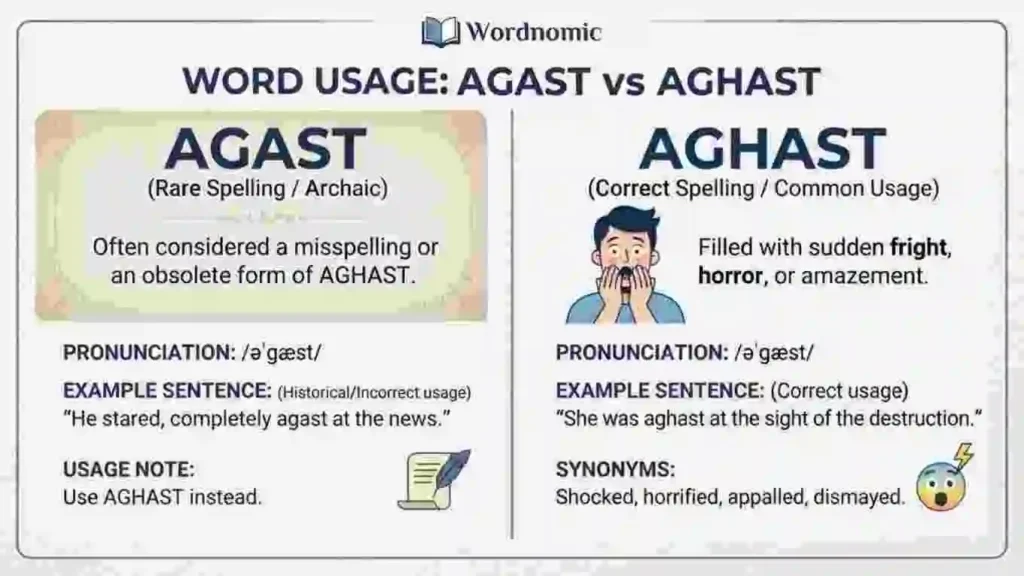
The main difference is simple.
Aghast is the correct word.
Agast is usually a spelling error.
There is no common standard English word agast that means shocked or horrified.
| Feature | Aghast | Agast |
| Standard English word | Yes | No |
| Correct spelling | Yes | No |
| Part of speech | Adjective | Not normally used |
| Meaning | Very shocked or horrified | Usually a misspelling |
| Example | She looked aghast. | Incorrect in standard English |
Origin and History of Aghast
The word aghast has a long history in English.
It comes from older forms of English linked to feelings of fear and terror. The word has been used for many centuries.
Its older meaning was closely connected with being frightened or struck with fear.
Over time, aghast developed into the word we use today for someone who is deeply shocked, frightened, or horrified.
This long history helps explain why the spelling may look unusual to modern English learners.
The gh in aghast is also easy to overlook because the word does not have a simple spelling pattern.
British English vs American English
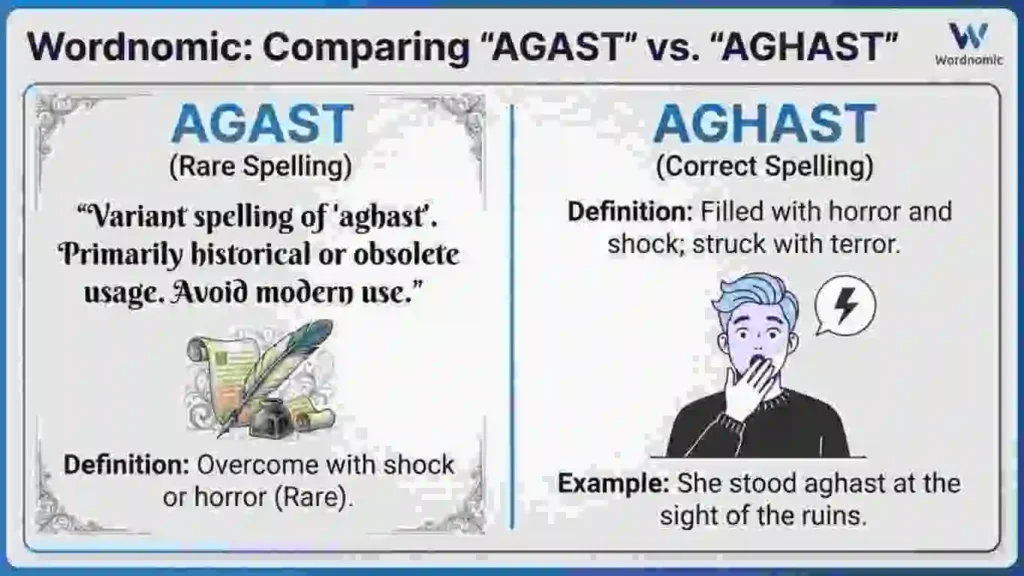
There is no spelling difference between British and American English for this word.
Both use:
aghast
British English
She was aghast at the news.
American English
She was aghast at the news.
So you do not need to choose between aghast and another regional spelling.
The correct spelling is aghast in both forms of English.
How Do You Pronounce Aghast?
Aghast is usually pronounced something like:
uh-GAST
The first part is weak, and the second part sounds like gast.
The h does not have a strong separate sound.
This pronunciation may make the spelling harder to remember.
Because the h is not strongly heard, some people leave it out and write agast.
Remember:
Pronunciation: uh-GAST
Spelling: A-G-H-A-S-T
Which One Should You Use?
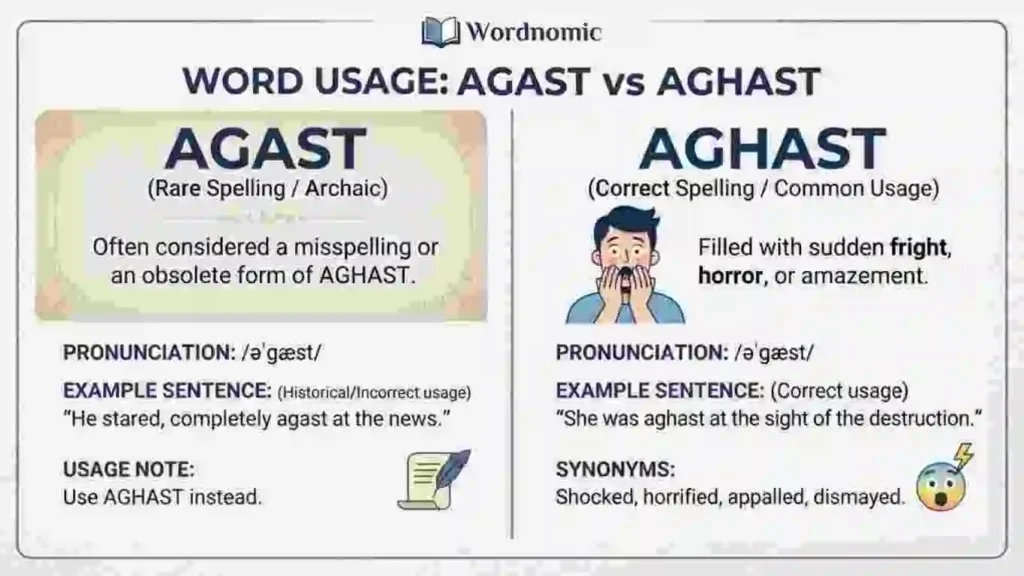
Use aghast whenever you want to describe someone who is very shocked, frightened, or horrified.
Do not use agast in standard English writing.
This is especially important in:
- School work
- Essays
- Emails
- Reports
- Articles
- Business writing
- Formal documents
Easy memory tip
Think:
Aghast has GH.
You can remember the spelling by breaking it into:
A + GHAST
The word always needs the h.
Common Mistakes With Aghast
Mistake 1: Writing agast
❌ She was agast at the news.
✅ She was aghast at the news.
Mistake 2: Leaving out the H
The h is part of the correct spelling.
Remember:
aghast
Not:
agast
Mistake 3: Using aghast for normal surprise
Aghast usually describes a strong reaction.
For a small surprise, use words such as surprised or amazed.
I was surprised by the result.
For a very serious reaction:
I was aghast at the result.
Mistake 4: Confusing aghast with angry
Aghast does not simply mean angry.
Someone can be angry without being aghast.
Aghast focuses on shock, fear, or horror.
Aghast in Everyday Examples
Here are simple examples to help you understand the word.
- She was aghast at the terrible news.
- He looked aghast when he saw the bill.
- The teacher was aghast at the damage.
- They stood aghast after the accident.
- I was aghast when I heard the story.
- The family was aghast at the sudden loss.
- She stared at him, aghast.
- He was aghast at the high cost.
- We were aghast by the shocking report.
- The crowd looked aghast.
Aghast in Real-Life Usage
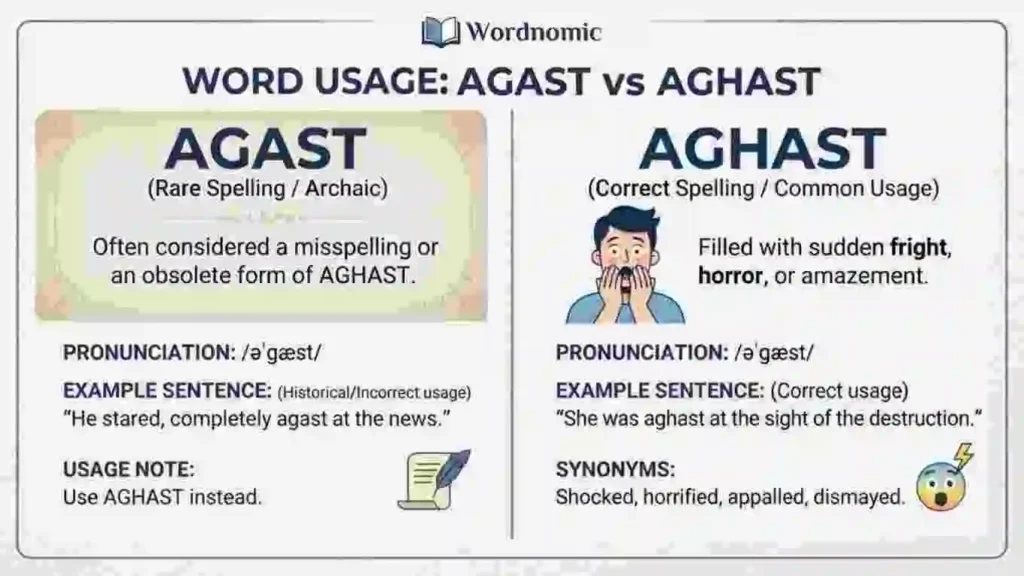
You may see aghast in news stories, books, essays, and formal writing.
Writers often use it when they want to show a strong emotional reaction.
In a news report
Residents were aghast at the sudden damage.
In a story
Maria stood aghast when she opened the door.
In an article
Many people were aghast at the unexpected decision.
In conversation
I was aghast when I heard what happened!
The word is correct in both speech and writing, but it can sound more formal than shocked.
Related Search Questions
People who search for agast or aghast may also ask:
- Is agast a word?
- Is aghast the correct spelling?
- What does aghast mean?
- How do you spell aghast?
- What is the meaning of aghast?
- How do you pronounce aghast?
- Is aghast British or American?
- What is another word for aghast?
- What is the difference between aghast and shocked?
- Can aghast be used in a sentence?
Usage and Search Trends
The spelling aghast is the standard form used in dictionaries and normal English writing.
People may search for agast because the word can be difficult to spell from its pronunciation.
The main search intent behind “agast or aghast” is usually spelling help.
A person may know the meaning but not remember whether the word contains h.
For this reason, the clearest answer is:
Aghast is correct. Agast is usually a misspelling.
When writing an article or school assignment, always use aghast.
Comparison Table
| Word | Spelling | Meaning | Use |
| Aghast | A-G-H-A-S-T | Very shocked or horrified | Standard English |
| Agast | A-G-A-S-T | Usually a misspelling | Avoid |
Aghast vs Similar Words
| Word | Simple meaning |
| Aghast | Very shocked or horrified |
| Shocked | Very surprised or upset |
| Horrified | Very scared or upset by something terrible |
| Surprised | Did not expect something |
| Stunned | Extremely surprised |
FAQs About Agast or Aghast
Is “agast” a correct word?
No. Agast is usually a misspelling. The standard English word is aghast.
Is “aghast” the correct spelling?
Yes. Aghast is the correct spelling.
What does aghast mean?
Aghast means very shocked, frightened, or horrified by something.
Is aghast an adjective?
Yes. Aghast is an adjective.
For example:
She looked aghast.
Is aghast used in British English?
Yes. British English uses aghast.
American English also uses aghast. The spelling does not change.
What is an easy synonym for aghast?
Simple synonyms include shocked, horrified, and stunned.
The best choice depends on the sentence.
How can I remember the spelling of aghast?
Remember that aghast has an H.
Write:
A-G-H-A-S-T
not:
A-G-A-S-T
Featured Snippet Answer
Aghast is the correct spelling. It means very shocked, frightened, or horrified. Agast is usually a misspelling and should be avoided in standard English.
Conclusion
When choosing between agast and aghast, the answer is simple: aghast is the correct spelling.
Aghast means very shocked, frightened, or horrified. It is an adjective and often describes a strong reaction to something bad, surprising, or frightening.
For example:
She was aghast at the news.
The spelling can be hard because the h is not clearly heard when we say the word. This can lead people to write agast. However, standard English uses aghast.
British and American English both use the same spelling.
If you want an easy way to remember it, keep this rule in mind:
Aghast has an H.
So, whenever you mean very shocked or horrified, use aghast, not agast.
URL Slug
/agast-or-aghast/
Featured Image SEO
Image file name: agast-or-aghast.jpg
Alt text: Agast or aghast correct spelling guide
Image title: Agast or Aghast: Correct Spelling
Image concept: Create a clean educational graphic showing “AGAST ❌” and “AGHAST ✅”, with a short note saying “Aghast is correct.”
Internal Linking Opportunities
You can link this article to related spelling and word-choice articles such as:
- Correct spelling guides
- Common English spelling mistakes
- Aghast vs shocked
- Aghast vs horrified
- Similar English word comparisons
- Commonly confused words
Use natural anchor text. Do not force the exact keyword into every link.
External Source Suggestions
For trust and further reading, consider linking to:
- Major English dictionaries
- University language resources
- Trusted grammar websites
- British and American English reference sources

Emily Carter is an English grammar writer based in Portland, Oregon, with 7+ years of experience turning tricky grammar rules into simple, easy lessons.